
Best Battery-Powered Sprinkler Controllers: 9 Picks in 2026
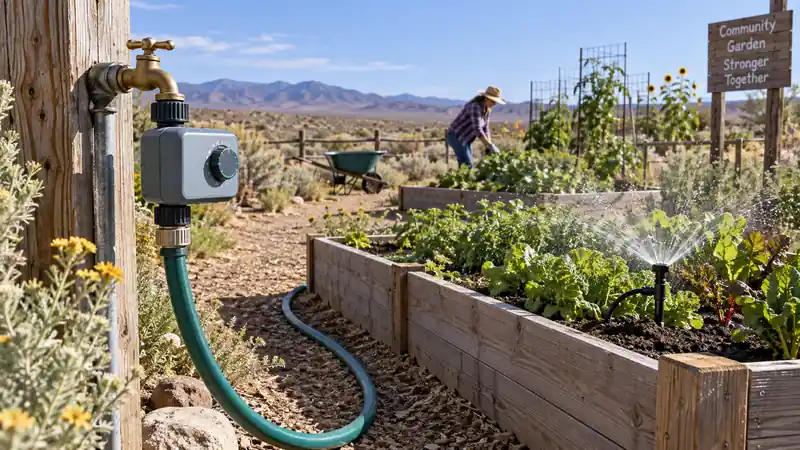
The best battery-powered sprinkler controllers solve a site-specific power problem, but only when their outputs match the valves and water source being controlled. A controller beside buried valves, a timer-and-valve assembly at one watering point, and a device threaded onto an outdoor faucet may all run without a nearby outlet, yet they do not control the same hardware. Start with the water path and valve map, then choose the timer that belongs at that connection.
The nine picks below cover remote valve boxes, single-circuit valve assemblies, and faucet-fed lines. Keeping those categories separate prevents a common mismatch: a hose timer’s outlet count is not the same thing as the number of wired sprinkler valves it can operate. Each review focuses on the installation that gives that model a real job.
Quick Answer
For a remote in-ground valve box with no nearby power, start with Hunter’s battery-operated controllers. For a single inline watering point, compare the DIG and Orbit timers. For beds or containers supplied from a hose faucet, look at the multi-outlet timers instead.
- Hunter XC Hybrid 6-Zone Battery Timer is the most controller-like option here for a six-valve map and can use battery or AC power with compatible DC-latching solenoids.
- Hunter NODE-400 4-Zone fits four remote in-ground valves when a waterproof, local controller and DC-latching solenoids suit the installation.
- DIG RBC 8000 Battery Controller combines a timer with a single anti-siphon valve for a one-circuit installation away from mains power.
- Orbit B-hyve XD 4-Port Hose Timer is the pick for four hose-fed lines, not a replacement for a wired valve-box panel.
Use the table to separate those product classes before comparing features. The best match depends on where water enters the system, how many valves need independent schedules, and whether the valve hardware is compatible with a latching battery controller.
Comparison at a Glance
“Stations” here refers to the linked product’s described control arrangement. A hose timer’s outlets are not the same thing as wired underground sprinkler stations. Confirm the exact package contents and model revision before purchase, particularly when a separate solenoid or valve may be needed.
| Product | Product class | Control capacity | Where it fits | Critical check |
|---|---|---|---|---|
| Hunter XC Hybrid 6-Zone | Battery or AC controller | 6 stations | Remote in-ground valve map | Uses DC-latching solenoids |
| Hunter NODE-400 4-Zone | Battery valve-box controller | 4 stations | Four wired valves beyond AC reach | Solenoid compatibility and wire length |
| Hunter NODE-BT-100 | Bluetooth battery controller | 1 station | One isolated valve with nearby phone setup | Single station and Bluetooth range |
| DIG RBC 8000 | Timer with inline anti-siphon valve | 1 station | One point-of-use circuit | Pipe thread, pressure, and mounting location |
| Orbit 57860 Battery Timer | Battery timer with inline valve | Single timer/valve arrangement | Remote valve where a basic local program is enough | Valve fit and model-specific wiring |
| Hunter BTT Bluetooth Hose Timer, 1-Zone | Bluetooth hose-faucet timer | 1 hose line | One faucet-fed bed, container group, or drip branch | Bluetooth range, hose thread, pressure, and flow |
| Orbit B-hyve XD 4-Port | Battery hose-faucet timer | 4 hose outlets | Raised beds, containers, and hose-fed drip | Faucet flow, winter storage, and hub needs |
| MOES 4-Zone Water Timer | Battery hose timer | 4 hose outlets in the listing | Separate watering from one faucet | Exact version, pressure range, and schedule controls |
| Insoma 4-Zone Water Timer | Battery hose timer | 4 hose outlets in the listing | Small multi-bed or container setup | Outlet sequence, battery access, and freeze protection |
What “Battery-Powered” Means in an Irrigation System
A battery-powered controller can operate where a transformer or electrical outlet is inconvenient, but it may still need compatible wiring between the controller and valve. Most in-ground battery units use a brief electrical pulse to operate a DC-latching solenoid. That valve holds its state mechanically or magnetically, so the controller does not need to supply the steady current used by a common 24-volt AC solenoid. The difference is why a battery controller cannot be assumed to work with the solenoid already on every valve.
Some products include the latching solenoid; others are sold as a controller alone. The installation may require replacing a standard solenoid on each valve, checking connector type, extending wire, or choosing a controller with the right station count. A battery unit is convenient only after those parts are compatible. Read the valve and controller manuals as one wiring plan.
Hose-end timers are another category. They screw onto a faucet and open one or more outlet valves. They are useful for containers, a small greenhouse, or a temporary drip line, but they do not connect to the low-voltage station wires in a buried valve box. Pressure, backflow protection, freezing temperatures, and the number of hose outlets become more important than the controller’s terminal layout.
There is also a difference between battery power and battery backup. Some controllers can run from either batteries or an AC adapter. Others are designed specifically for remote battery operation. That affects what happens if an existing panel has power, what valve hardware is required, and how much work a replacement entails.
How We Evaluated These Picks
These picks are ranked by installation fit, usable control capacity, and the work required to make the timer operate safely. A low station count can be an advantage on a remote single valve; multiple faucet outlets matter only when the water source can support the lines. Items that require a specific solenoid, thread, pressure range, or app workflow are judged against those practical constraints.
Controller, valve, solenoid, or hose timer
First identify the piece being replaced. If a wired controller is failing but the existing valves use standard AC solenoids, a battery controller may require more than moving the station wires. If the system has a manual valve and no station wiring, a hose timer or a battery timer with an integrated valve may fit better. If the valve is already compatible with a battery timer, a replacement solenoid may solve a repair, but it cannot create a schedule by itself. A hose tap timer such as the BTT-100 controls a faucet-fed line instead of wired valves.
For a hose-fed system, count separate outlets from the faucet and determine whether the timer runs them independently or in sequence. Four outlet ports do not mean four buried valves. Check that the faucet can supply the chosen lines at their required pressure and that connections will stay accessible.
Station count should follow the valve map
Count independently operated valves. A four-station NODE can schedule four wired circuits. A single-station timer can run one valve even when its water outlet branches to several emitters. That branching does not create independent programs. If one bed needs more frequent watering than another, separate valves are needed before additional controller stations will help.
Extra capacity has a practical use when a remote garden will expand or each area needs a different schedule. It can also add complexity: more solenoids, more wire splices, and more places to troubleshoot. Choose a reserve that follows a real plan rather than a hypothetical future yard.
Battery access is part of service access
Find out how the battery compartment opens, how the controller reports a low battery, and whether a depleted battery can interrupt the schedule. A valve-box controller may be waterproof but still benefit from a location that can be opened without disturbing buried wiring. A faucet timer should be removed and stored before hard freezes if the maker directs it; water trapped inside a plastic housing can damage the valve.
Battery life varies with cell chemistry, temperature, watering frequency, and model design. Treat “up to” figures as conditions rather than guarantees. Use the battery type listed in the manual, keep a replacement on hand, and check the status indicator before a long absence.
Hunter XC Hybrid 6-Zone Battery Timer: Best for a Remote Six-Valve System
A remote valve cluster with six independently controlled circuits is where the XC Hybrid earns its footprint. The linked six-station version can keep a lawn, side-yard beds, and a separate planting area on distinct schedules without routing a long control cable back to a powered wall cabinet. Hunter also offers a twelve-station version, so confirm the model number before ordering.
The station count only helps if the valve hardware matches. XC Hybrid operates DC-latching solenoids. A conventional 24-volt AC coil should not be treated as interchangeable; identify the coil on every valve and confirm the replacement parts before moving wires. If the system has mixed valve types, resolve that first rather than trying to program around it.
Local programming is a practical advantage at a remote box. The controller supports three programs with up to four start times per program, giving separate watering windows without a phone connection at the valve. That can be useful when the site has weak service or when the person maintaining it prefers a display and buttons over app menus.
Power flexibility gives the installation a second path if the property changes. The XC Hybrid can operate from batteries or an AC transformer, depending on configuration. It is still a wired irrigation system: each station needs a compatible valve and intact station wiring. Keep the enclosure accessible for service, even when the box is well away from the house.

Pros
- Six independently timed stations can keep remote lawn and planting circuits separate without a long run back to a powered cabinet.
- Local programming remains available at the valve area, so manual checks do not depend on Wi-Fi or a phone.
Cons
- Battery operation requires DC-latching solenoids, which can add valve work when the existing system uses AC coils.
- The six-station version leaves no spare output once six valves are already assigned and the landscape is still expanding.
Take a closer look at XC Hybrid if the property has several remote valves and the solenoid compatibility check comes back clean. It brings the familiar structure of a six-station controller to a place where power is scarce. If the project is only one valve or a hose-fed garden, a smaller timer will avoid paying for a panel-sized solution.
When six valve outputs are genuinely needed beyond the reach of convenient power, the XC Hybrid is the broadest fit in this group. Its case weakens quickly on a one-valve bed or faucet-fed garden, where a smaller timer avoids extra capacity and solenoid work.
To buy this product, click here.
Hunter NODE-400 4-Zone: Best Waterproof Pick for Four Remote Valves
The NODE-400 puts the control point beside the valves. Its four stations suit a remote cluster where four circuits need separate timing, while the waterproof enclosure is intended for damp valve-box conditions. That location can spare a long run back to a house controller, but it does not remove the short station wires between the unit and each valve.
Programming stays on the device, with three programs and four start times per program. The unit runs on one or two 9-volt batteries, and supported NODE setups can also use an optional solar panel. Check what the exact package contains; a solar accessory or valve solenoid should not be assumed to come in the box.
Plan the valve conversion before mounting the controller. Hunter’s multi-station NODE models use DC-latching solenoids, and the NODE-400 is commonly sold without them. If the current valves carry ordinary AC coils, those coils may need replacement. Label each station wire while the original setup is still connected, then verify every zone manually after installation.
A sealed case is helpful, but it does not make poor splices or standing water harmless. Leave room to open the cover and replace batteries, use connectors rated for the location, and keep the valve-box lid serviceable. Those details matter more after the controller is buried under mulch or hidden behind a planting bed.

Pros
- Four separate station outputs let a remote valve cluster give unlike beds or landscape sections their own programs.
- The sealed enclosure and local screen make the unit practical for a valve-box location without an AC cabinet.
Cons
- The controller operates DC-latching solenoids, so a conversion may require compatible solenoid purchases and hands-on valve work.
- Battery checks remain part of seasonal maintenance, especially where the unit is difficult to reach.
NODE-400 is the clearer choice over a single-station unit when four remote valves already exist. It is less compelling for a valve box wired to standard AC coils and a powered controller that can be kept indoors. The compatibility and wire-run checks decide whether its compactness is a true advantage.
Four remote valves with compatible latching coils give the NODE-400 a clear job. If the existing system already has a powered controller and AC solenoids, this compact box is not a drop-in shortcut; the coil and wiring conversion can outweigh the benefit of moving control outdoors.
To buy this product, click here.
Hunter NODE-BT-100: Best for One Isolated Valve with Nearby Bluetooth Access
One isolated valve does not need a four-station controller. NODE-BT-100 is Hunter’s single-station battery model for a valve that lacks a practical power route, such as a detached planting bed or a remote drip circuit. It belongs at the valve, where the station wire and compatible DC-latching solenoid are within reach.
Bluetooth changes the adjustment routine, not the kind of irrigation it controls. Pairing and schedule changes happen from a phone near the unit, while the on-device indicators and buttons provide a local way to check status or run watering. There is no need to depend on Wi-Fi reaching a box at the edge of the property.
The product supports one zone and uses 9-volt batteries; follow Hunter’s manual for the allowed battery configuration and replacement guidance. A low-battery check before a hot stretch is sensible, especially if the valve is difficult to reach or the system will be left unattended. Sensor options are available, but confirm the exact sensor and connection before adding one to the plan.
The tradeoff is straightforward: one output means one schedule. If a valve feeds several branches that need different runtimes, the plumbing must be divided into separately controlled circuits. If the valve box already contains several valves, NODE-400 is the more coherent option than installing several independent single-station units.

Pros
- The single-station format gives one remote valve its own schedule without paying for unused multi-zone outputs.
- Bluetooth access and on-device status controls make nearby setup and manual testing easier at a valve with no permanent power.
Cons
- A phone must be close enough for Bluetooth setup or changes, which is less convenient when the valve is far from the usual service path.
- One station cannot split a shared valve’s branches into different schedules or cover a multi-valve box.
NODE-BT-100 is the right scale for a single remote circuit, especially when someone can reach the valve during programming and battery checks. It is a narrow solution by design. For a broader valve map, choose the NODE-400 rather than linking multiple one-station units unless the separate control points are intentional.
For a single remote valve that someone can visit during setup and seasonal checks, NODE-BT-100 keeps the hardware compact and the programming convenient. A box that is hard to access, or a valve map with multiple independent circuits, points toward a different controller.
To buy this product, click here.
DIG RBC 8000 Battery Controller: Best Single-Valve Timer with an Integrated Anti-Siphon Valve
The RBC 8000 combines the timer and a three-quarter-inch anti-siphon valve in one assembly. That layout can simplify a single watering point where a separate valve-box controller would add parts and plumbing. It is a different solution from the NODE: the DIG unit is installed at the water connection and controls one circuit rather than several wired valves.
A two-AA power supply, LCD, keypad, manual flow control, and rain-sensor connection keep routine operation local. The programming gives one station up to four start times. DIG publishes installation and pressure requirements for the assembly, so check those against the supply line and local backflow rules before choosing a mounting location.
An integrated anti-siphon valve is useful only when the plumbing arrangement suits that valve type. Thread size, pressure, clearance, and the required position relative to the highest sprinkler head all affect whether the assembly can be installed correctly. It should not be treated as a universal replacement for an existing in-ground valve.
One station can serve a complete drip branch or sprinkler circuit if every outlet on that branch can share a schedule. Separate lawn and bed timing calls for separate valves and control points. The RBC 8000 also needs a reachable display and battery compartment, so avoid hiding it behind a permanent enclosure or dense planting.

Pros
- The timer and anti-siphon valve arrive as one assembly, reducing the parts coordination needed for a single remote circuit.
- Two AA cells, a local keypad, and a rain-sensor connection offer a self-contained control point without an AC cabinet.
Cons
- Its single-station design cannot manage separate circuits unless each has another valve and timer.
- The integrated valve’s thread, pressure, and backflow requirements need to match the plumbing before installation.
RBC 8000 has a clear role where one compatible valve and timer can be installed together near the water line. It is more complete than buying a controller and valve separately, but only for the right thread and pressure conditions. A multi-zone property should look first at a NODE or XC Hybrid.
The RBC 8000 is the unusual pick for a one-circuit installation that benefits from having the timer and anti-siphon valve together. If the site needs multiple schedules or already has a compatible valve box, a multi-station controller is the more natural starting point.
To buy this product, click here.
Orbit 57860 Battery Timer with Valve: Best Local Timer for a Remote Single Circuit
The Orbit 57860 takes a local, in-ground approach: the battery timer works with a valve arrangement at the remote watering point, rather than hanging from a hose faucet. That makes it worth considering where power is absent but the circuit is still controlled through an irrigation valve. The current linked listing is labeled as a two-pack, so check the package contents and treat it as a bundle, not as a two-station controller.
Before adapting an existing valve, verify the exact 57860 version and the included valve or solenoid parts. Orbit’s battery-timer guidance is model-specific, and similar-looking valve bodies can differ in their latching-solenoid compatibility. Do not assume that a timer can operate an unchanged AC coil just because the station count appears to match.
Local controls suit a fixed schedule that can be set at the valve box. This arrangement avoids a required phone connection, but it also means a schedule change or manual test takes a visit to the installation. That is a reasonable trade for a detached zone that is checked during regular yard maintenance, less so for a site that needs frequent remote adjustments.
Place the display and battery access where they can be reached after the box is finished. Keep the lid clear, label the circuit, and run a manual test through a full open-and-close cycle before leaving the system. If the timer and valve are sold together, confirm the fittings and flow path still match the existing plumbing.

Pros
- The integrated battery timer and inline-valve design can automate one remote circuit without bringing mains power to the location.
- Local programming avoids a phone account or network requirement for owners who want a fixed, on-site schedule.
Cons
- A single timer serves one circuit, so separate beds or lawn zones need additional valves and independently controlled units.
- Valve and latching-solenoid compatibility should be confirmed before moving an existing sprinkler valve into the setup.
Orbit 57860 makes sense for one remote zone when the valve arrangement matches the timer and local programming is enough. If the goal is a hose-mounted timer at a spigot, choose a hose-end product instead; the two installations are not interchangeable.
Choose the 57860 when the project calls for local battery control at a compatible remote valve and the bundled parts match the installation. A faucet-fed bed belongs with a hose timer instead, while a multi-valve box needs a controller built for separate stations.
To buy this product, click here.
Hunter BTT Bluetooth Hose Timer, 1-Zone: Best for One Faucet-Fed Line
A flower bed that is reachable from the spigot but far from the house controller needs a different kind of battery timer. Hunter’s BTT-100 attaches directly to a hose-thread faucet and schedules one hose-fed line. It is a better match for a small lawn edge, container group, or drip branch than for buried valves with station wires.
This version uses two AA alkaline batteries and pairs to a phone over Bluetooth, with a stated communication range of up to 32 feet. That is convenient when adjusting the timer beside the tap, but it is not remote internet control from across town. The built-in button also provides manual watering, so a quick test does not require opening the app.
Hunter lists run times from one second to 24 hours, up to eight start times, and a Cycling Mode for repeated short watering windows. The published operating range is 7–116 PSI and 0.5–600 gallons per hour per zone. Check the actual faucet pressure and the flow needs of the connected hose or drip system; a controller cannot make a low-flow source deliver more water.
The BTT-100 is the three-quarter-inch hose-thread model. Hunter lists a separate BTT-101 with a BSP connection and quick-coupler adapter, so confirm the model marking if the faucet or imported fitting uses a different thread. A tap timer also needs a suitable backflow setup and winter removal where freezing can leave water in the housing.

Pros
- Bluetooth setup within range and a physical manual button make a single faucet-fed line easy to test without visiting a buried valve box.
- Included AA batteries and direct hose-thread mounting keep the installation self-contained for a small bed or container run.
Cons
- Bluetooth is the control path, so schedule changes from farther away require a nearby phone rather than a standard Wi-Fi connection.
- One tap outlet cannot replace a multi-station controller or give several buried valves independent schedules.
Where one hose-fed circuit needs a dependable schedule and the person maintaining it can reach the faucet, the BTT-100 keeps the setup tidy and approachable. A remote valve box, multiple independent circuits, or a need for access from outside Bluetooth range calls for another class of controller.
To buy this product, click here.
Orbit B-hyve XD 4-Port Hose Timer: Best for Four Hose-Fed Lines
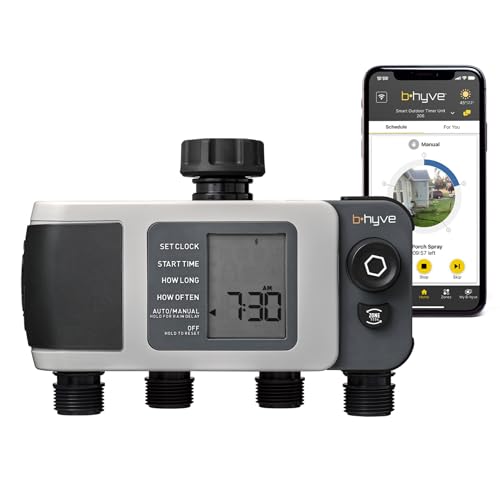
Four hose-fed circuits from one outdoor faucet are the B-hyve XD 4-Port’s territory. It hangs at the tap and routes water to separate hose or drip lines, a practical layout for containers, raised beds, or a small greenhouse. The four outlets are not four underground valve stations; no station wiring runs from this timer to a buried valve box.
Orbit’s controls allow outlet selection and programming at the timer, while app use adds scheduling options. The manufacturer notes that setting a day-of-week schedule requires the app, so check that workflow if the timer will be set up by someone who prefers to avoid a phone. A hub may be needed for remote access away from the local Bluetooth connection, depending on the setup.
All four outlets draw from the same faucet supply. Orbit lists a 10–100 PSI operating range for its hose timers and says they do not include a built-in backflow preventer. Check the home’s faucet pressure, the combined watering window, and backflow requirements instead of assuming each port can deliver a full independent flow at once.
This is a seasonal hose connection, not a fixture to leave full of water through a freeze. Orbit recommends draining and storing hose timers where freezing conditions occur. Give the timer support so the weight of four hoses does not twist the faucet threads, then inspect each connection during the first run.
Pros
- Four outlets let a single faucet-fed setup keep several beds or container lines on their own run times.
- Battery operation and app options are useful where the garden has no wired valve controller or wall power nearby.
Cons
- It is a hose-end timer, so it cannot operate buried valve-box circuits through their station wires.
- The faucet connection needs freeze-season removal and suitable backflow protection rather than year-round outdoor installation by default.
B-hyve XD belongs on a hose-fed garden shortlist, particularly when four separately scheduled lines would replace several manual faucet changes. It is the wrong category for a homeowner who needs a replacement for an underground controller. Choose according to where the timer will connect, not the number printed on the ports.
If several garden lines already start at one spigot, this four-port timer can replace a string of manual faucet changes with scheduled outlets. The fit ends at the hose connection: a homeowner replacing a wired lawn controller should choose a valve-box model instead.
To buy this product, click here.
MOES 4-Zone Water Timer: Best for a Four-Line Faucet Setup
MOES is listed as a four-zone hose timer, which places it in a different category from battery controllers wired to buried valves. Its appeal is a single faucet serving several separately routed garden lines. Raised beds, pots, and seasonal planting are plausible uses, provided the exact package offers the outlet behavior and schedule controls the layout requires.
The listing name alone does not settle how the zones run. Check the manual for independent start times, outlet sequencing, maximum run duration, low-battery behavior, and any app or hub requirement. Those details determine whether the timer fits a daily watering plan or simply offers more hose connections than the garden can use.
Water supply is the limiting factor when several lines share a tap. Make sure the faucet, tubing, and emitters can maintain the needed flow, and observe the far end of each line after setup. If the beds need very different runtimes, confirm that the controls let you set those differences rather than relying on one schedule copied across every outlet.

Pros
- Four hose outlets can separate small garden lines without the expense of adding a wired underground valve system.
- A faucet-mounted format keeps the timer close to the plants and service point in a compact yard.
Cons
- The exact programming, pressure, and outlet-sequencing details need a model-specific manual check before it is assigned to a demanding irrigation layout.
- Hose connections remain exposed to seasonal freezing and physical strain from attached lines.
MOES is worth comparing when the job is to automate several lines from a faucet and the specific listing confirms the schedules you need. It should not be mistaken for a battery valve-box controller. For a more complex system with buried valves or a sensor requirement, move to a dedicated in-ground model.
MOES is best evaluated as a faucet-side organizer for a compact garden, not as a replacement for an in-ground panel. It earns a place only if the current version’s programming matches the way those lines need to run.
To buy this product, click here.
Insoma 4-Zone Water Timer: Best for a Simple Multi-Bed Hose Layout
Insoma’s four-outlet timer makes the most sense where a single spigot serves multiple small planting areas. A row of containers, a pair of raised beds, and a short greenhouse line can be kept on separate outlets without adding buried valves. The product remains a hose-end device, so the garden has to be within reach of a faucet and hose routing.
The current listing presents manual watering and rain-delay functions. Treat those as controls to verify on the exact unit, not as evidence of automatic weather sensing. Before purchase, check the program layout, how each outlet is selected, the maximum run time, and whether the display can be operated comfortably once hoses are attached.
For four lines, planning the watering order matters as much as outlet count. If the faucet cannot supply the needed flow to multiple lines at once, sequential operation may extend the overall watering window. Mark the hoses by bed, test each outlet individually, and confirm that the last emitter receives water before relying on a longer unattended schedule.
Freezing weather calls for disconnecting and draining hose equipment according to its manual. Keep the battery door accessible and avoid letting hose weight pull on the faucet. Those small installation choices make it easier to inspect leaks or switch a line without disturbing the rest of the garden.

Pros
- Four outlets can give separate watering intervals to small beds or container groups served from one faucet.
- A local rain-delay control can pause a routine after observed rain without requiring a new schedule for every brief weather change.
Cons
- Its faucet-mounted design does not connect to in-ground valve wiring or operate a remote manifold of standard sprinkler valves.
- Battery access, winter storage, and the exact outlet-programming behavior should be checked before the timer is left unattended.
Insoma is a better match for several short garden lines than for a full lawn system. Its value rests on an outlet-by-outlet schedule that fits the faucet’s flow and the beds’ needs. Verify the model’s controls before deciding between it and the B-hyve XD, especially if app access or manual programming is important.
Insoma suits a garden that needs several modest hose schedules from one accessible tap. If a buyer values verified control behavior over a fourth outlet, compare its manual and current package closely with the B-hyve and MOES listings before settling on it.
To buy this product, click here.
How to Choose Between a Valve-Box Controller and a Hose Timer
This is the decision that will narrow the list fastest. Look at the water path and the current control point, then identify whether the system already has buried electric valves.
Choose a valve-box controller for buried station wires
If each zone already ends at a solenoid valve and the wiring runs to a remote box, a Hunter NODE or XC Hybrid is built for that kind of arrangement. Count the valves and check their coils. Battery controllers typically need DC-latching solenoids, and some models ship without them. Compare station outputs, compatible coil, wire gauge, and maximum lead length before moving the existing wiring.
The box must remain serviceable. A waterproof controller helps in a damp location, but the lid, connectors, battery compartment, and splice points still need inspection. Label each station before disconnecting the old controller so a later battery change or zone test is straightforward.
Choose a faucet timer for hose-fed lines
Use a hose-end timer when water leaves a faucet through a hose or short manifold. This is common for containers, raised beds, a greenhouse, or seasonal planting. Confirm the faucet’s pressure and flow, the timer’s outlet layout, and whether every line receives an independent schedule. The timer’s outlet count does not tell you how many buried sprinkler valves it can control.
A faucet setup needs protection from freeze damage and safe backflow management. Disconnect and drain the timer when freezing weather is expected if the maker directs it. Keep the faucet and attached fittings within the installation’s backflow requirements. If the supply is a rain barrel or gravity-fed line, check minimum pressure, because a hose timer may not operate reliably at low pressure.
Decide whether one zone is enough
A single station can be appropriate for one isolated orchard row or drip circuit. It becomes limiting if the system needs separate lawn, shrub, and bed schedules. One timer per valve may work where valves are physically separated, but it also creates more battery compartments and schedules to maintain. A multi-station controller at the valve box keeps those controls in one place.
For hose systems, one outlet may feed a long drip line with many emitters. That line remains one schedule. If different plants need separate runtimes, divide the plumbing or choose an outlet timer with truly independent programs.
Solenoid and Valve Compatibility Checklist
Before buying a battery-powered in-ground controller, identify the existing valve manufacturer and solenoid model. Photograph the label and wiring, note any bleed lever, and check whether the product expects a DC-latching coil. AC and latching solenoids are designed around different electrical behavior. A controller advertised as “battery compatible” does not necessarily drive an unchanged AC valve.
Check whether the timer includes a solenoid, a valve, both, or neither. Hunter NODE-400 versions are often sold without a solenoid. DIG RBC 8000 is a timer-and-valve assembly. Hunter BTT-100 attaches at a hose faucet, while Orbit battery-valve parts are limited to specified valve families. Those are materially different boxes to receive.
Once the exact parts are known, compare wire type, length, waterproof connectors, thread, valve pressure, and mounting arrangement. For an integrated anti-siphon valve, confirm that the plumbing and local requirements support that design. If electrical or plumbing work is unfamiliar, involve a qualified irrigation technician rather than guessing at terminal or solenoid compatibility.
Battery Maintenance and Seasonal Operation
Start with fresh batteries of the type listed in the manual. Do not mix old and new cells, different chemistries, or partly used sets. Mark the installation date inside the lid or in the property’s maintenance notes. A battery indicator is useful, but a seasonal check catches weak cells before a long dry spell.
Battery life depends on controller design, temperature, watering frequency, and valve response. A solenoid that does not latch cleanly may consume extra power or fail to close. If the battery drains unusually quickly, inspect the valve and wiring instead of simply changing cells more often.
Hose timers need particular attention before winter. Shut off the faucet, remove hoses, drain the timer, and store it in a protected place when temperatures approach freezing. Underground valve-box controllers may remain installed through winter if the manufacturer allows it, but the irrigation lines may still need seasonal shutdown or blowout in climates where they freeze.
For a property that will be unattended, run each zone manually before leaving. Make sure valves close, the low-battery indicator is clear, and the schedule is set correctly. Keep the replacement battery type and the model’s instructions where the person checking the system can find them.
Frequently Asked Questions
Can a battery-powered controller run my existing sprinkler valves?
Sometimes, but confirm the solenoid type. Many battery-powered in-ground controllers require a DC-latching solenoid, while a common wired controller uses a 24-volt AC coil. The product may include a compatible solenoid, require one separately, or operate only a specific valve family.
Are hose timers the same as underground sprinkler controllers?
No. A hose timer attaches at a faucet and controls water through hoses or its own manifold. An underground controller operates wired valves through station and common wires. Their outlet counts, pressure limits, installation locations, and backflow requirements differ.
How many batteries does a valve-box controller use?
It varies by model. Hunter NODE documentation lists one or two 9-volt alkaline batteries, while some hose timers use AA cells. Use the model’s manual for battery type and replacement guidance, and check status before a long unattended period.
Does battery operation mean no wiring is required?
No. A valve-box controller may still need station wires to each solenoid and waterproof splices. “Battery-powered” describes the controller’s power source, not necessarily a wireless connection to the valve. Hose timers avoid station wiring because they attach directly to the faucet.
Can one hose timer water four zones at once?
Do not assume so. Four outlets may be scheduled separately but could run sequentially, depending on the device. Check the exact manual and total flow available from the faucet. The timer’s capacity should be understood as control outlets, not a promise of simultaneous watering.
Will a battery timer work with drip irrigation?
It can, provided pressure and flow are within the timer and emitter system’s requirements and the line is connected to a suitable valve or outlet. A timer controls duration; it does not regulate pressure, filter debris, or correct uneven emitter output. Check the far end of the line after the first run.
How should I store a hose-end timer for winter?
Follow the manufacturer’s seasonal instructions. Orbit recommends removing its hose timers, draining water, and storing the unit in a warm, dry location where freezing occurs. Leaving water inside a connected timer can damage its valve or housing.
Final Verdict
For a remote multi-valve system, Hunter XC Hybrid offers six-station control with a battery or AC path, while NODE-400 brings four valve-box stations into a sealed local unit. The single-station Hunter NODE-BT-100 and DIG RBC 8000 each suit a narrower remote zone, with the DIG integrating an anti-siphon valve. Orbit 57860 is a local battery-timer option for a compatible remote valve; Hunter BTT-100 serves a different need at a hose faucet, with Bluetooth access for a single line.
For faucet-fed beds or containers, Orbit B-hyve XD, MOES, and Insoma belong to a different class. They can make several hose lines easier to schedule, but they do not replace a panel wired to buried valves. Before settling on a model, identify the valve or faucet connection, count the circuits that need separate timing, verify the solenoid or outlet compatibility, and decide who will check the batteries. Those checks lead to a dependable fit more reliably than the word “smart” or the station count alone.

- Ryan
Ryan Mitchell covers sprinkler controllers, smart irrigation, and watering technology at Best Sprinkler Controllers, with a focus on clear comparisons, practical features, and helping homeowners choose the right setup for their yard.
- Best Sprinkler Controllers Without Subscription Fees November 20, 2026
- Sprinkler Controller Has No Power: What to Check First November 18, 2026
- Best Local-Control Sprinkler Controllers: 9 Cloud-Light Picks November 16, 2026
- Best Smart Sprinkler Controllers With Physical Controls November 14, 2026
- Best Battery-Powered Sprinkler Controllers: 9 Picks in 2026 November 10, 2026