
Best 6-Zone Sprinkler Controllers: 9 Picks in 2026
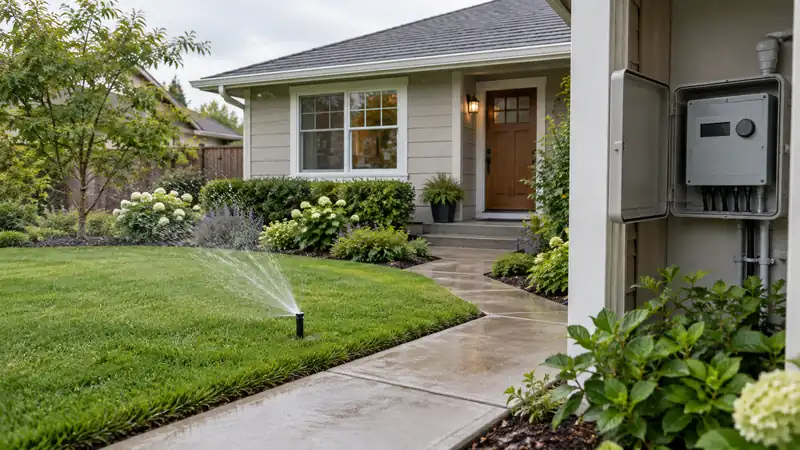
The best 6-zone sprinkler controllers are the ones that match the valves already in the ground. A six-station replacement still needs to fit the mounting point, power supply, sensor wiring, and schedule that the landscape requires. One valve may serve the front lawn, another a narrow side strip, and two others may feed beds that need different run times.
Here, nine six-station controllers are compared across those practical differences. Some keep watering local and simple. Others add app access, weather adjustments, or a path to a more advanced platform. They are not interchangeable just because the station count matches. A controller that suits a sheltered garage can be wrong for an exposed valve box, and a connected model may add little value if you prefer to set the schedule at the panel.
We organized the shortlist around the decisions that shape a six-zone system: where the controller can be installed, how you want to change schedules, whether smart features require extra hardware, and what kind of programming the yard actually needs. Product details can vary by exact package, so confirm the model number and included parts before purchase, especially when a Wi-Fi add-on or weather sensor is part of the plan.
Quick Answer
If you want a fast starting point, compare these four before reading the full reviews. The PRO-HC suits owners who want a substantial connected control system. B-hyve balances local operation with app access. ARC6 keeps Wi-Fi scheduling in a more compact indoor unit. X2 is the straightforward local controller for a homeowner who views smart control as optional rather than essential.
- Hunter PRO-HC 6-Zone is the most capable fit here for a connected six-valve setup with a permanent mounting location.
- Orbit B-hyve Smart 6-Zone suits households that want app scheduling without giving up buttons and a screen at the controller.
- Rain Bird ARC6 is a sensible indoor choice when Wi-Fi access matters more than outdoor mounting flexibility.
- Hunter X2 6-Zone makes sense for local dial-based control, with connected scheduling available only through the separately purchased WAND module.
How to Read a Six-Station Controller Comparison
“Six zone” describes the number of valve stations the controller can operate. It does not describe the number of sprinklers, the area each zone can cover, or how much water the system applies. One zone might run a single drip line while another operates several lawn heads. The controller opens those zones according to a schedule; pipe size, pressure, valve condition, head layout, and soil determine what happens outdoors.
A settled six-valve system has no spare station. That is not automatically a problem. If every existing valve is in use and the property is unlikely to expand, a six-station unit avoids paying for capacity that has no job. But the fit is exact, so a future side-yard bed, a separate drip circuit, or a new tree zone would require a controller change or a different system plan. Count valve wires at the existing controller and label them before disconnecting anything.
| What to check | Why it affects the choice | Questions to answer at home |
|---|---|---|
| Mounting location | Indoor-only units need a protected dry location; outdoor-rated cabinets make placement more flexible. | Is there a sheltered wall near power and the valve wiring, or will the unit face weather? |
| Control style | App-first products differ from controllers with full local scheduling and a clear screen. | Would you rather adjust a run time at the panel, from a phone, or have both routes? |
| Program structure | Multiple programs help separate lawn, drip, and different watering days. | Do zones need separate calendars, several start times, or only one simple routine? |
| Smart hardware | Some traditional controllers gain Wi-Fi only after an optional module is added. | Is the network accessory in the box, or is it an extra purchase and setup step? |
| Sensor and pump wiring | Rain sensors, master valves, and pump-start connections use dedicated terminals and compatible wiring. | What is already connected, and does the exact controller provide the required terminals? |
| Service access | A large display or hinged panel can be convenient if you regularly change settings in person. | Can you reach and read the controls comfortably after installation? |
What a Six-Zone System Needs From Its Controller
Capacity should match the valve layout, not the property’s acreage
Six valves can cover a small city lot or a much larger landscape with efficient drip sections. The right count comes from the valves, not a rule of thumb based on square footage. If an existing system has six working valve circuits, a six-zone controller can replace its timer without combining areas that have different watering needs. If the terminal block has only five active wires, the remaining station may be useful later, but it does not create a new zone by itself. A new valve and hydraulic design would still be needed.
Before buying, photograph the current wiring, note the controller model, and write down which station number waters each area. Look for a common wire, any sensor wires, a master-valve or pump-start connection, and whether the transformer is integrated. A neat replacement is easier when the labels are already clear. If wire colors are inconsistent or several conductors disappear into a bundle, identify each valve by running it individually before removing the old unit.
“Smart” can mean very different things
Some products include Wi-Fi and a phone app as part of the base controller. Others are conventional timers with a compatible add-on module. A third group may offer a companion app with weather adjustments while still expecting you to use the panel for core setup. These distinctions affect purchase cost, installation, and what continues to work if the home network changes.
It is also useful to separate remote access from automatic watering decisions. A phone app may let you start a zone or edit a schedule; that alone does not establish that the controller will make reliable local weather decisions. Check which features are available without a subscription, whether the controller retains a schedule when the internet is unavailable, and whether any promised sensor or module is included. For a connected system, a clear manual fallback is worth considering before installation.
Keep watering logic understandable
Separate programs are valuable when the landscape has different routines, but more options can make first setup less intuitive. Lawn areas may need different cycle lengths from drip irrigation. A shady bed may not follow the same seasonal pattern as a sunny slope. Look at the program and start-time structure, not simply the number of buttons or the presence of an app. The controller should make it practical to change one group of zones without accidentally shifting every other area.
Cycle-and-soak settings can be useful on slopes or compacted soil because they break a long watering period into shorter runs with pauses. The feature does not correct poor sprinkler coverage or excessive pressure, and it is not automatically the right choice for every zone. Treat it as a scheduling tool that can support an irrigation plan, not as a substitute for adjusting heads and checking runoff.
Which Features Matter Most in a Six-Zone Replacement?
For some homes, weather response is the deciding factor. For others, the important detail is mundane: a readable display, simple seasonal adjustment, or an enclosure that fits the existing location. The sections below translate the specifications into the tradeoffs that are likely to affect day-to-day ownership.
Local controls versus phone-first scheduling
Local controls matter during installation and whenever the router, app, or phone is unavailable. A dial or panel can make manual testing and short schedule changes quicker. App controls are useful when the controller is mounted in an awkward location or when a household wants to review schedules away from home. Models that offer both reduce dependence on one interaction method, though the app still needs setup and a stable compatible connection for remote features.
Think through the changes you make most often. If seasonal adjustment is the only routine edit, a single control on the front may be enough. If you manage several start times, rain delays, and different days across programs, remote schedule views may be easier to review. Ease is personal, so compare screenshots or manuals rather than assuming that “smart” automatically means simpler.
Indoor versus outdoor installation
Do not rely on a broad product-family name when the exact six-station version has a specific indoor or outdoor rating. ARC6 and several compact indoor timers belong in a dry, protected area. Other models use a weather-resistant enclosure, but that still does not mean they can be buried, submerged, or mounted in any exposed location. Check the manual for the exact model and the allowed mounting orientation.
A controller mounted outside needs a suitable power connection and protection from direct water exposure. Indoor placement may be easier to service, but only if the valve wiring can reach and the location stays within the controller’s requirements. If a product requires a separate outdoor cabinet, include that part and its installation in the comparison rather than treating it as a minor afterthought.
Weather sensors, master valves, and compatibility
Rain and freeze response can be handled through an app, a local sensor input, or both, depending on the controller. A sensor terminal does not mean a sensor is included. Confirm compatibility and whether the sensor interrupts all programs or operates under specific settings. In a region with freezing winters, seasonal shutdown and proper system winterization still matter; a weather feature is not a replacement for draining or protecting irrigation pipes.
Some properties use a master valve or pump-start relay. The controller must support the needed wiring, and a pump installation can require an appropriate relay and electrical planning. Check the controller manual alongside the irrigation system’s wiring diagram. When the existing system has unusual valves, a well, a pump, or a sensor arrangement you cannot identify, it is safer to confirm the connection plan with an irrigation professional before swapping equipment.
Six-Zone Controller Types at a Glance
The models in this guide fall into three broad camps. This is a useful lens for comparing them, though individual products can cross over between categories.
- Connected systems with a full platform: Hunter PRO-HC and Orbit B-hyve add app-based scheduling to their local control options. They suit owners who will use the added access and scheduling tools.
- Smart access in a compact controller: Rain Bird ARC6 provides Wi-Fi-oriented scheduling in an indoor six-station design. The convenience depends on the homeowner being comfortable with its app-centered setup.
- Local-first timers: Hunter X2, Rain Bird TRU6I and SST600IN, and the Orbit timers prioritize on-device setup. Some have an optional route to connected functions, but the base experience is more direct and less network-dependent.
The HiOazo listing is the outlier in this group. It advertises Wi-Fi app control and weather-related skip functions at a relatively broad level, but the documentation and long-term support picture is less established than the named irrigation brands. It deserves extra verification rather than the same confidence assigned to a better-documented platform.
Before You Replace the Existing Timer
Start with a short compatibility audit. Confirm the exact controller version, transformer arrangement, valve type, sensor wiring, and whether the system uses a pump or master valve. Standard residential controllers commonly operate 24-volt AC irrigation valves, but do not assume every old installation is standard. The model manual is the source to use for terminal layout and electrical requirements.
- Run each existing station and label the wire by the area it waters.
- Photograph the terminal connections before removing conductors.
- Write down start times, run times, watering days, rain-delay settings, and seasonal adjustment.
- Check whether the new unit is indoor-only, indoor/outdoor, or requires a separate enclosure.
- Verify that a sensor, Wi-Fi module, power adapter, or outdoor cabinet is included if the planned installation depends on it.
- After wiring, test every zone manually before relying on the automatic schedule.
Color alone is not a reliable way to identify valve wires. Keep the existing station numbering where possible, because a map that matches the physical yard is easier to maintain than one that reflects a new but arbitrary order. If a wire is damaged, a valve does not respond, or the controller fuse trips, stop and diagnose the circuit rather than repeatedly cycling power.
When a Six-Zone Controller Is the Wrong Size
A six-station controller is a poor fit if the system already has more than six active valves or is likely to add separate irrigation circuits soon. Combining two areas to stay within the count can create awkward runtimes and uneven coverage. A landscape with a lawn, multiple drip beds, a greenhouse, and a future expansion may be better served by a larger-capacity model, though several stations could remain unused at first.
At the other end, a six-zone unit may be more controller than necessary for a small installation with only one or two valves, but it can still be a reasonable replacement if the wiring and price make sense. The useful question is whether the controls, footprint, and installation requirements fit the project, not whether every terminal will be occupied.
Nine Six-Zone Controllers, Compared by Fit
The details below are organized around the part of each model that changes the buying decision. Use the table for the short version, then read the profile for installation and ownership tradeoffs. A six-zone label alone does not establish that two controllers share the same mounting rating, sensor connections, app features, or included accessories.
| Controller | Control approach | Placement / upgrade note | Strongest use case |
|---|---|---|---|
| Hunter PRO-HC 6-Zone | Hydrawise connected platform plus local controls | Confirm installation and network requirements for the exact model. | Multiple programs and irrigation-oriented connected management. |
| Orbit B-hyve Smart 6-Zone | App, Wi-Fi/Bluetooth setup, and on-unit panel | Indoor/outdoor enclosure; use the manual for site exposure. | Households wanting app convenience and a physical fallback. |
| Rain Bird ARC6 | Connected scheduling through app | Indoor installation. | Compact six-station smart control in a protected location. |
| Hunter X2 6-Zone | Local dial programming; optional WAND for Wi-Fi | Check the exact model’s mounting instructions; module is separate. | Conventional control with a later connectivity option. |
| Rain Bird TRU6I | Local program-based timer; optional LNK2 module | Indoor-only; verify accessory package. | Several distinct schedules without requiring smart functions. |
| Rain Bird SST600IN | Direct local station-by-station setup | Indoor-only. | Simple indoor timer for a stable, familiar routine. |
| Orbit 57896 Swing Panel | Local programming | Indoor/outdoor housing with swing-out access panel. | A serviceable wiring layout and conventional operation. |
| Orbit Easy-Set Logic 27896 | Local A/B/C program dial | Indoor/outdoor; confirm exact model and terminal needs. | Separate watering calendars with straightforward hands-on setup. |
| HiOazo HSC-600W | Listing advertises app and weather skips | Indoor; independently check app, manual, and support details. | A connected feature set worth considering only after verification. |
The table is not a ranking by feature count. It is a way to remove options that cannot fit the actual site. If the controller must live outdoors, first set aside indoor-only ARC6, TRU6I, and SST600IN unless a proper protected location is available. If the owner refuses to depend on an app, the local-first models deserve more attention. If remote schedule changes are the point, compare the complete included hardware and account requirements rather than relying on “Wi-Fi ready” wording.
Choosing Between Similar Six-Zone Timers
PRO-HC, B-hyve, and ARC6 are connected, but not the same purchase
The PRO-HC is the more irrigation-platform-oriented option, with a broad set of program and wiring capabilities. B-hyve’s appeal is the combination of an app and direct controls in an indoor/outdoor unit. ARC6 keeps the connected approach in a Rain Bird indoor controller. None is automatically best for every six-valve yard. Decide whether you need a more elaborate management platform, a dual local-and-app interface, or a compact indoor smart timer.
X2 and TRU6I offer an upgrade route, with separate hardware
Hunter X2 and Rain Bird TRU6I are both local-first controllers that can be made more connected with compatible add-ons. That shared concept can obscure different tradeoffs: the Hunter starts with a dial-based controller and a separately purchased WAND module, while the Rain Bird TRU6I is an indoor program-based timer with an optional LNK2 path. Confirm the right module for the exact controller generation and compare the total rather than the base price alone.
Orbit’s two conventional timers have different practical strengths
The 57896 is the one to inspect if access to the wiring compartment and a swing-out front panel are meaningful during installation and maintenance. Easy-Set Logic emphasizes its A/B/C local programming. Both are conventional timers, and neither should be selected on the assumption that Orbit’s smart features carry over to every model. Read the exact model number on the box and manual.
Setup Decisions That Make a Six-Zone Controller Easier to Live With
Map the old schedule before moving wires
Write down zone names, start times, runtimes, and watering days while the original controller still works. A station list such as “1 front lawn, 2 north beds, 3 side strip” is more durable than remembering a sequence of terminal numbers. Keep a copy near the controller or with the irrigation records. The map helps identify a wiring mistake when the first manual test waters the wrong section.
Rebuild the schedule around the plants and soil
A replacement controller can preserve the old program, but the old run times may not be right for the current landscape. Turf, shrubs, trees, and drip irrigation have different needs, and slope or compacted soil may call for shorter cycles with pauses. Begin conservatively, watch for pooling or runoff, and adjust after checking the actual coverage. The controller cannot compensate for clogged heads, mismatched nozzles, a leaking valve, or poor pressure.
Plan network setup where the signal will be used
A connected controller needs a reliable signal at its installed location, not merely a router that works in the living room. Check the phone app and connection requirements before the old timer is removed. Set a local schedule where the model supports it, and confirm what the controller does during an outage. If a smart module is optional, install and test the timer’s standard functions first, then add connectivity as a separate step.
Test one station at a time
Run each zone manually after wiring and compare it to the map. Listen for valve response, check that the expected area waters, and look at the display for an error. If one station stays on, fails to open, or activates the wrong valve, switch off power and trace the wire connections before running an automatic program. A short commissioning check can prevent an overnight schedule from exposing an installation problem.
Who Should Buy a Smart Six-Zone Controller?
Remote control has a clear use when the timer is inconvenient to reach, several people manage the property, or schedule changes happen while the owner is away. Weather-related features can be worthwhile if their data source and adjustment behavior are clear. For a homeowner who wants to watch the watering calendar and make changes from the kitchen or while traveling, the connected models are a reasonable fit.
They are less persuasive if the schedule barely changes and the controller is easy to reach. The equipment still needs to be installed, configured, and occasionally checked. A network problem should not leave the system without a usable watering plan. If app access would sit untouched after setup, a local controller may be the more dependable match for the way the household actually manages the yard.
When to Step Up to More Than Six Stations
Consider an eight- or twelve-station model if a new valve is likely, if a drip section needs to be separated from nearby lawn, or if the current system already combines areas with noticeably different needs. The upgrade is especially relevant during a major landscape change, when conduit and wiring are being planned anyway. Spare terminals do not water anything by themselves, but they can avoid another controller replacement later.
Do not add capacity solely because a bigger number sounds safer. Match the controller to a plausible valve plan and the available wiring. An unused terminal is harmless, but there may be no benefit in paying for stations the landscape cannot use. For a settled six-zone property, this list intentionally compares fixed six-station models rather than suggesting that capacity alone determines performance.
Hunter PRO-HC 6-Zone
The PRO-HC is the feature-heavy member of this group, and it earns that position through irrigation-specific controls rather than a larger station count. Hunter offers a six-station version with Hydrawise, a touchscreen, multiple programs, and connections for sensors and a master valve or pump start. For a settled six-valve system that already uses those connections, it can replace the timer without simplifying away useful controls.

Why choose a platform controller for six valves?
Because a six-station limit leaves no unused output in a fully occupied system, each zone needs to be represented deliberately. Hydrawise gives the owner a way to review separate schedules, while the local screen remains useful during commissioning and manual checks. The platform is most helpful when those controls will actually be used. A basic timer can be the better value for a fixed calendar that rarely changes.
Before deciding, check the network requirements and the current plan terms for features you want. Also confirm the sensor wiring against the manual. An input terminal is not evidence that a sensor is in the package, and flow monitoring requires the appropriate hardware. The controller can organize watering, but it cannot correct a valve that leaks or a head that misses the edge of a bed.
Pros
- Hydrawise gives an owner with varied watering schedules one connected place to review and adjust all six active stations.
- Sensor and master-valve/pump connections can fit an existing installation without routing around missing controller terminals.
- The touchscreen gives the installer a clear local way to check an individual station while matching wires to the yard map.
- Multiple programs let a fully occupied six-valve layout keep different watering calendars apart when turf and drip are not managed alike.
Cons
- Hydrawise adds setup and ongoing network considerations that a homeowner with a fixed schedule may never use.
- Useful monitoring depends on compatible accessories and correctly planned wiring, not the controller alone.
PRO-HC is the strongest six-station fit here for an owner who wants a more capable platform and has a permanent, serviceable mounting point. If the yard needs little more than a weekly schedule and an occasional manual run, the premium control path may sit idle.
To buy this product, click here.
Orbit B-hyve Smart 6-Zone
A six-zone timer mounted in an awkward corner is easier to manage when both the phone and the controller itself remain useful. That is the B-hyve’s practical advantage: Orbit pairs its app with local controls, and the six-station unit supports Wi-Fi and Bluetooth. A homeowner can set up remotely, then still use the panel for a quick manual check.
The enclosure is designed for indoor or outdoor use, subject to the installation instructions. For a full six-valve system, the four-program structure helps divide routines where beds, lawn, and other areas do not share the same watering days. Cycle-and-soak and weather skip options add flexibility, but the owner should decide which settings suit the site rather than turn on every option by default.

Expect some pairing and schedule review during setup. B-hyve is not automatically simpler because it has an app; its value depends on whether the extra access replaces a nuisance in the current routine. Check which sensors are included, the Wi-Fi signal at the intended wall, and how you will operate the system if a phone or router is unavailable.
Pros
- The mix of app scheduling and on-unit controls lets household members use whichever method is practical at the moment.
- Four programs and cycle-and-soak give a six-valve yard more room to separate lawn and planting schedules.
- Cycle-and-soak can break a long run into shorter intervals on a slope or slow-draining patch, helping limit runoff before water has time to soak in.
- Its indoor/outdoor enclosure leaves more options for replacing a timer where a suitable dry indoor mounting point is not close to the valve wiring.
Cons
- Pairing and app setup take time that brings little benefit to an owner who wants a set-and-forget local timer.
- Weather and sensor features need deliberate configuration, and some accessories may be separate.
B-hyve belongs on the shortlist when remote adjustments and a local fallback both matter. If the controller is easy to reach and the watering calendar is stable, a conventional Orbit timer below may be enough.
To buy this product, click here.
Rain Bird ARC6
Start with the mounting location on this one. ARC6 is an indoor six-station controller, so an exposed exterior wall is a reason to look elsewhere or relocate the unit to a suitable dry area. Once that constraint is satisfied, it offers connected scheduling in a compact Rain Bird controller for a smaller valve map.

ARC6 is the connected Rain Bird option here; TRU6I is the local program-based model with an optional LNK2 route. Those are different tradeoffs, not merely two names for the same controller. ARC6 makes sense when app access is the reason for choosing it. TRU6I is more suitable for someone who wants the familiar local schedule first and may add connectivity later.
| Decision | ARC6 | TRU6I |
|---|---|---|
| Mounting | Protected indoor location | Protected indoor location |
| Starting point | Connected app scheduling | Local program-based control |
| Expansion to app features | Built around its connected controls | Optional compatible LNK2 module |
Wi-Fi setup is part of commissioning, and the controller should be installed where the signal and power connection are practical. Check the current manual for sensor compatibility and package contents. A rain-sensor port or app feature should not be read as evidence that every soil probe works with the unit.
Pros
- App-based scheduling gives an owner remote access to a modest Rain Bird system without a larger station count.
- The compact indoor format avoids the need for an outdoor cabinet when a dry utility location is already available.
- A six-station map can keep each valve assigned to its own schedule instead of combining areas with different watering needs.
- Its connected setup is part of the ARC6 choice, so a buyer who wants app scheduling does not need to add the optional LNK2 module used with TRU6I.
Cons
- Indoor-only installation can rule it out as a direct replacement for a timer that must stay outside.
- App-centered use is less appealing to an owner who prefers full programming at the controller.
ARC6 is a focused choice for a protected indoor wall and a buyer who expects to use connected schedules. Without both, the local-first TRU6I or a weather-rated Orbit may fit the job better.
To buy this product, click here.
Hunter X2 6-Zone
Hunter X2 starts as a conventional dial-programmed controller. The owner can run six stations locally and set separate A, B, and C programs; four start times per program leave room for distinct schedules. Wi-Fi is an upgrade rather than a base assumption. That makes the X2 useful for a homeowner who wants a familiar timer now but would like to preserve a route to Hydrawise later.
The optional route has a clear boundary: WAND is sold separately. Compare the controller-plus-module cost with an all-in-one connected model if remote access is essential from day one. Some buyers will appreciate being able to postpone that decision; others may not want another purchase and setup step.

Three checks before adding WAND
- Confirm that the exact X2 six-station model is supported by the module in the package you plan to buy.
- Check the network signal and account requirements where the controller will be mounted.
- Verify mounting and power instructions for the exact X2-600 version, since product-family descriptions can vary.
Pros
- Local dial programming keeps initial setup available without a phone, router, or app account.
- The separately available WAND lets an owner add Hydrawise only when connected scheduling becomes useful.
- Three programs and four start times per program make room for separate watering days and staggered runs across the six valves.
- Because the WAND upgrade is optional, an owner can keep the initial replacement local and defer connected features until they are genuinely useful.
Cons
- Remote control adds the cost and setup of WAND rather than arriving in the standard controller package.
- The exact installation environment should be matched to the specific model manual before mounting.
Choose X2 for the local interface and optional upgrade path, not because its family name suggests that Wi-Fi is included. If you need the connected experience immediately, compare the complete accessory cost against PRO-HC or B-hyve.
To buy this product, click here.
Rain Bird TRU6I
The TRU6I is an indoor controller for buyers who want several distinct schedules without making an app the starting point. Rain Bird gives it three programs and four start times per program, alongside manual station runs, seasonal adjustment, and delay controls. On a six-valve system, that is enough structure to keep lawn and drip routines apart when the installation and watering plan call for it.

Its wiring options are useful for a more involved replacement: the unit supports a rain sensor and a master-valve or pump-start connection. A compatible LNK2 module can add app access, but it is an optional purchase. Treat “Wi-Fi ready” as a compatibility path, not a promise that the module is in the box.
The indoor-only rating is not a footnote. If the old timer is mounted outside, moving the controller may mean extending or rerouting low-voltage wires. Confirm the mounting plan before checkout, and avoid improvising an enclosure that the manufacturer has not approved.
Pros
- Three programs and multiple start times give an owner more control over different watering routines without an app-led setup.
- Rain-sensor and master-valve/pump terminals can match a replacement where those connections are already part of the system.
- Manual station runs make it easier to confirm that each newly wired valve reaches the intended area before relying on the automatic calendar.
- A rain-delay setting can pause scheduled watering after a wet spell without requiring the owner to rebuild the saved program.
Cons
- Indoor-only placement can add relocation work when the existing timer is exposed outdoors.
- Connected scheduling requires the compatible LNK2 module, which is not the same as built-in Wi-Fi.
TRU6I is the local-first Rain Bird choice for a dry, accessible mounting spot and a homeowner who values separate programs. Pick ARC6 instead when connected operation is the priority and indoor placement is still workable.
To buy this product, click here.
Rain Bird SST600IN
For an indoor replacement with a steady routine, SST600IN keeps the decision focused on station-by-station programming. The front controls are built for direct changes at the controller, which can suit a household where schedules are set locally and an app would be one more thing to maintain.
That simplicity can help when someone else occasionally needs to run a zone or check the schedule. Write the area name beside each station and keep the mapping with the controller. A clear map is more useful during seasonal service than a complicated program that nobody remembers how to adjust.

There is a narrow but important fit: this version is indoor-only. It has no connected control path in the configuration covered here, so owners wanting remote changes or weather-based app schedules should compare ARC6 or B-hyve. Confirm sensor inclusion separately; compatibility and box contents are different questions.
Pros
- Direct station setup gives a homeowner a simple way to make local runtime changes without pairing a phone.
- The six-station capacity is a straightforward match for a settled six-valve layout.
- With no app account or network pairing in the described setup, seasonal adjustments stay within the controller rather than depending on a connected service.
- Station-by-station changes let a homeowner fine-tune one area’s runtime without treating all six circuits as though their water needs were identical.
Cons
- The indoor rating rules it out as a like-for-like replacement at an exposed mounting point.
- No app access means a remote schedule change requires another connected controller or an in-person visit.
SST600IN is a good fit when a protected wall, stable valve map, and hands-on control describe the job. That recommendation changes if the household relies on remote access or the existing unit must remain outdoors.
To buy this product, click here.
Orbit 6-Station Indoor/Outdoor Swing Panel Timer
Orbit’s 57896 earns attention at the wiring stage. The swing panel opens away from the base, exposing the terminal area while the installer labels and lands each station conductor. That does not replace a wiring diagram, but it gives the owner more room to see the connections while swapping a six-station timer.
Once installed, it remains a conventional local controller in an indoor/outdoor housing. Buyers choosing it for exterior use should still follow Orbit’s mounting and power instructions; weather resistance is not permission to expose the unit to flooding or a direct spray. The six-station count is also a firm limit, so map all active valves before selecting it.

Pros
- The swing-out panel makes the wiring area easier to reach during installation and later service.
- Indoor/outdoor housing gives an owner more placement options than a protected-interior-only timer.
- Conventional local operation keeps the watering schedule available even where a router signal is weak or the owner prefers not to manage another app.
- A fixed six-station replacement can preserve the existing one-valve-per-output map without paying for a larger controller whose extra stations would remain unused.
Cons
- Local controls do not provide remote schedule review or app-based weather adjustments.
- Six stations leave no spare output when every valve is already assigned.
Pick the 57896 when a serviceable terminal layout and conventional operation matter more than connected features. If app scheduling is part of the brief, compare Orbit’s B-hyve instead of assuming the timer family shares one control system.
To buy this product, click here.
Orbit Easy-Set Logic 6-Station
Easy-Set Logic’s defining detail is its A/B/C program dial. Those three independent programs are helpful when different parts of the yard need separate watering days or start times. They give the owner a local way to separate turf from slower-watering beds, without adding an app or network account to the commissioning process.

This is a conventional six-station indoor/outdoor timer. Its value is the scheduling structure and hands-on setup, not a smart upgrade. Orbit’s programming guide is worth a read before installation if the household has not used A/B/C programs before; overlapping start times can unintentionally stack watering cycles. Also confirm the exact model number and terminals when the system has a sensor, master valve, or pump-start connection.
Easy-Set is close enough to the Orbit swing-panel model that buyers should compare them directly. The 57896 emphasizes access to its wiring bay. Easy-Set Logic gives a clearer A/B/C programming identity. Choose between those everyday differences rather than assuming their enclosure and wiring features are identical.
Pros
- Independent A/B/C programs let the owner keep dissimilar watering calendars separate at the controller.
- The dial-based interface makes routine changes possible without app pairing or network access.
- The six available outputs suit a settled valve map without forcing the owner to combine circuits simply to fit the controller.
- Its local controls keep schedule changes possible at the enclosure when a phone, internet connection, or app account is not part of the household routine.
Cons
- There is no remote schedule management in the standard Easy-Set Logic experience.
- Overlapping program start times take care during setup, especially when the schedule is being changed by someone unfamiliar with the dial.
Choose Easy-Set Logic for separate local schedules and a hands-on routine. A household that wants to make changes away from the controller should step up to a connected model rather than expect this timer to behave like B-hyve.
To buy this product, click here.
HiOazo Indoor Smart 6-Zone Controller
HiOazo is the least established product line in this group, so its listing deserves more scrutiny than the better-documented Hunter, Orbit, and Rain Bird models. The current product page identifies an indoor six-zone controller and advertises app control, sixteen plans, and skips for rain, frost, and wind. Those claims make it a candidate, but they do not answer the questions an installer needs resolved.

Verify these details before you rely on the automation
- Ask whether “16 plans” means independent programs, presets, or another scheduling limit.
- Check the manual for valve voltage, sensor/pump terminals, the supplied power adapter, and indoor-only mounting requirements.
- Confirm the current app name, phone support, offline schedule behavior, warranty contact, and return window.
If those checks come back clearly, the advertised app and skip functions may suit a buyer looking for a connected timer at this station count. If documentation is hard to find or does not match the product in the box, choose one of the established controllers for a system that would be difficult to service or replace.
Pros
- The listing’s app scheduling and weather skips could be useful for a buyer who verifies that the present software supports the intended phone and network.
- A compact six-zone unit can fit a protected indoor location without requiring a separate weather cabinet.
- If the advertised 16-plan feature is confirmed in the current manual, it could give the owner room to retain distinct routines instead of overwriting one schedule to make another.
- A six-output indoor unit may suit a compact, settled valve map where the owner has verified the wiring and wants to avoid unused capacity.
Cons
- Documentation and long-term support are harder to assess than for the established irrigation brands in this guide.
- The listing’s description of plans and weather response should be reconciled with the current manual before the system depends on those functions.
Keep HiOazo as a conditional option, not the default recommendation. It may suit a buyer willing to validate the app and package carefully; for a controller expected to run unattended for years, clearer product documentation is worth prioritizing.
To buy this product, click here.
Frequently Asked Questions
Can I replace a six-zone controller without changing the valves?
Often, yes, if the existing valves and wiring are compatible with the new controller and the station count maps one-to-one. Photograph and label the conductors before disconnecting them, then compare the terminal diagram in the replacement manual. A controller swap does not fix a failed valve, damaged wire, or an unusual voltage arrangement. If the system includes a pump, master valve, or sensor, verify each connection before applying power.
Does a six-zone controller operate six zones at the same time?
Most residential controllers activate stations in sequence, but the exact behavior and any permitted overlap depend on the model and its settings. The six-station number describes how many valve outputs it can schedule, not how many circuits run simultaneously. Do not assume that adding stations increases flow or pressure; those are determined by the irrigation system and water supply.
Will an indoor timer work in a garage?
A dry, protected garage can be a suitable location if the exact controller’s temperature, moisture, power, and mounting requirements are met. Avoid placing an indoor-only unit where condensation, direct spray, or temperature extremes exceed its instructions. Also make sure the valve wires can reach without splicing them in an unsafe or inaccessible way.
Is Wi-Fi included with the Hunter X2 or Rain Bird TRU6I?
Not in the standard configurations covered here. Hunter X2 uses a separately purchased compatible WAND module for Hydrawise connectivity. Rain Bird TRU6I has an optional LNK2 route for connected control. Check the exact product bundle before ordering and compare the complete cost with a model that includes Wi-Fi in its base hardware.
Can the controller skip watering when it rains?
That depends on the model and the method. Some connected systems offer weather-based adjustments; others accept a compatible wired rain sensor, and some provide a manual delay. Confirm which functions are built in, which require an accessory, and how the controller applies a skip to each program. A rain skip also does not replace seasonal winterization or a site-specific watering schedule.
Should a six-zone controller have a seventh station for expansion?
A seventh valve requires a controller with another station output. A six-station model cannot add a new zone merely because the landscape expands. If a separate bed, tree line, or drip circuit is likely soon, compare a larger model now. If the six existing valves are expected to remain, a fixed six-station controller is an exact replacement and avoids paying for unused outputs.
What should I verify on the HiOazo controller before relying on its app?
Confirm the current manual, supported app name and phone operating systems, Wi-Fi requirements, schedule retention during an outage, warranty contact, and terminals for your valve and sensor wiring. The product listing advertises weather skips and multiple plans, but those phrases do not explain every technical detail. If documentation does not resolve a requirement that matters to your installation, choose a controller with clearer support information.
Final Take
The right six-zone controller is the one that fits the installed valves, the mounting location, and the way the household expects to manage watering. PRO-HC is the connected platform choice, B-hyve combines app access with a local panel, and ARC6 brings a compact smart option for an indoor location. X2 and TRU6I offer local schedules with optional connectivity, while the SST600IN and Orbit timers suit a more hands-on routine. HiOazo needs additional documentation checks before its advertised features should influence the decision.
Before ordering, match the exact model number to the manual, confirm whether required modules or sensors are included, and verify every wire and mounting requirement. After installation, test the six stations individually and adjust the program only after observing how the yard responds.

- Ryan
Ryan Mitchell covers sprinkler controllers, smart irrigation, and watering technology at Best Sprinkler Controllers, with a focus on clear comparisons, practical features, and helping homeowners choose the right setup for their yard.
- Best Irrigation Controllers With Rain Sensor Support November 4, 2026
- Best Sprinkler Controllers for Large Yards: 9 High-Capacity Picks November 2, 2026
- Best WaterSense Irrigation Controllers: 7 Certified Picks October 29, 2026
- Can I Replace an Old Sprinkler Controller With a Smart Controller? October 27, 2026
- Best Weather-Based Irrigation Controllers: 9 Smart Picks October 25, 2026