
Best Smart Sprinkler Controllers: 9 Picks in 2026
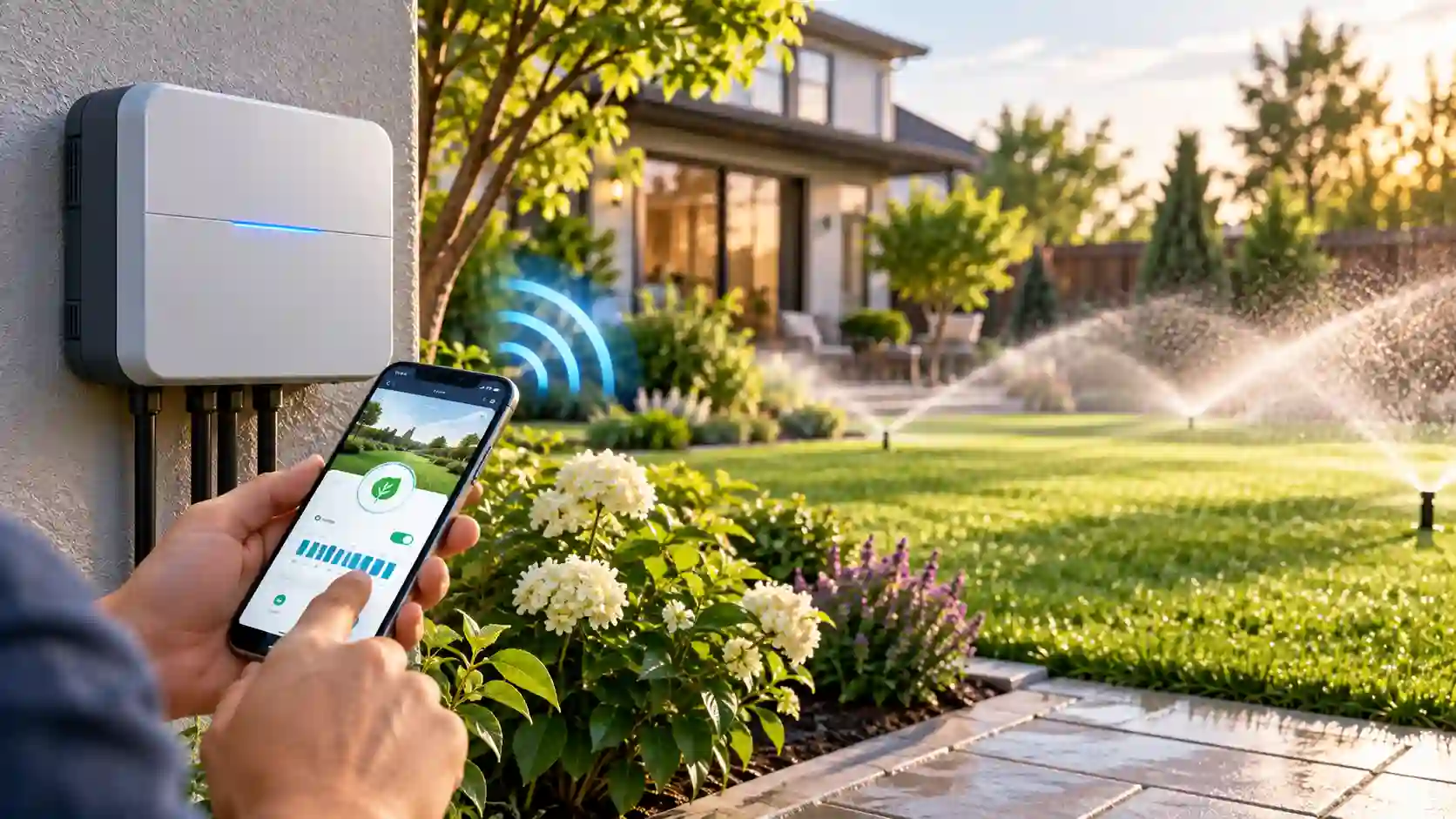
The best smart sprinkler controllers have to coordinate the irrigation system, changing landscape needs, and the way a household manages schedules. Station count is only the starting point. Mounting location, local controls, weather response, network coverage, sensors, pump wiring, and setup work all shape the right choice.
Once installed, a smart controller should make everyday watering easier to manage. A sunny lawn can follow a different schedule from shaded planting beds, an unnecessary cycle can be skipped after rain, and a quick adjustment can be made from a phone when no one is standing beside the controller. Those conveniences still depend on the basics being right: enough stations for every valve, reliable connectivity at the mounting location, and a practical way to run individual zones while checking a sprinkler head or tracking down a problem.
This guide compares nine models across those real installation questions. The group includes app-first controllers, systems with a screen or physical buttons, six-zone choices for smaller layouts, and larger models for properties that need more stations or monitoring connections. Product claims and feature descriptions should be checked against the current manufacturer information before installation, especially when a sensor, enclosure, module, or pump connection is part of the plan.
Start by counting the independent valves, then look at the controller location and the existing transformer, common wire, sensor, pump, or master-valve connections. A good controller is one that fits the wiring and the household’s control habits at the same time.
Quick Answer
These four models cover the main smart-controller buying paths, from app-led weather scheduling to larger systems with local controls and monitoring connections.
- Rachio 3 8-Zone is a strong general choice for weather-aware scheduling and a polished app.
- Orbit B-hyve XR 8-Zone fits an eight-zone system that may need indoor or outdoor placement.
- Hunter PRO-HC 12-Zone suits larger landscapes, sensors, pump connections, and flow monitoring.
- RAINPOINT Smart 8-Zone offers a straightforward path for a conventional eight-zone retrofit.
Smart Sprinkler Controller Comparison
| Controller | Stations | Control path | Best fit |
|---|---|---|---|
| Rachio 3 | 8 | App, Wi-Fi, Quick Run controls | Weather-aware residential schedules |
| Orbit B-hyve XR | 8 | App, built-in Wi-Fi | Flexible indoor or outdoor placement |
| Hunter PRO-HC | 12 | Touchscreen, Hydrawise, Wi-Fi | Larger systems and monitoring |
| Rain Bird ARC8 | 8 | App, Wi-Fi, local operation | Rain Bird households |
| Yardian Pro | 8 | App, Ethernet, Wi-Fi, buttons | Connected homes and wired networks |
| Netro Spark | 8 | App and touch controls | Plant-focused scheduling |
| Orbit B-hyve 57946 | 6 | App and Wi-Fi | Compact layouts |
| Rain Bird ARC6 | 6 | App and local operation | Smaller Rain Bird systems |
| RAINPOINT Smart 8 | 8 | App and physical buttons | Standard 24VAC retrofits |
The detailed sections below focus on the practical difference each model creates after installation. Look at the product section, the limitations, and the final fit paragraph together. A controller can have an impressive feature list and still be the wrong choice for the wall location, valve count, or service routine.
1. Rachio 3 Smart Sprinkler Controller, 8-Zone: Best Overall for Weather-Aware Scheduling

Rachio 3 is a strong starting point for a homeowner who wants the controller to adjust watering around local conditions rather than follow a fixed calendar. Its eight stations cover the layout found in many residential yards, with separate circuits for turf, planting beds, shrubs, trees, and drip irrigation. The app gives the homeowner a clear way to build those schedules and see which zones are expected to run.
The connected feature set includes weather-based skips for rain, wind, freeze, and saturated soil, along with seasonal adjustment and grow-in schedules. Dual-band Wi-Fi can help in homes that use both common wireless bands, and the quick-run controls provide a small amount of access at the controller. Rachio also lists support for Alexa, Google Home, and IFTTT, which gives the controller a place in a broader home automation plan.
The installation decision deserves attention because the controller is intended for an indoor location. A garage, utility room, or protected interior wall can work well, but an exposed mounting point needs an enclosure that matches the manufacturer requirements. The app carries most of the scheduling work, so a buyer who expects a full dial or screen at the controller may prefer a touchscreen or traditional model.
Pros
- Automatic weather skips can keep a fixed schedule from running unchanged after rain or freezing conditions.
- Dual-band Wi-Fi gives owners more flexibility when the home network uses both common wireless bands.
- The upcoming-run view helps an owner check which valve is due next and catch a schedule assignment that looks out of place.
- Quick Run provides a direct way to verify each valve after wiring without waiting for the next automatic cycle.
Cons
- The indoor installation profile may require a protected utility room or a suitable enclosure for exterior placement.
- Most schedule creation happens in the app, so buyers wanting a full local panel may prefer another style.
Rachio is the clearest match when weather-led scheduling and phone-based management are the reasons for upgrading. The indoor mounting requirement and eight-station ceiling are the two limits to settle before choosing it.
To buy this product, click here.
2. Orbit B-hyve XR, 8-Zone: Best Indoor and Outdoor Smart Option

Orbit B-hyve XR gives a residential system built-in Wi-Fi, remote control, and eight independently managed stations in a case intended for indoor or outdoor use. That combination addresses a practical problem that is easy to miss during a replacement project. The controller may need to sit near the valve wiring or in an exterior service area, and an indoor-only unit can force extra enclosure work before the schedule is even created.
The B-hyve app supports custom programs for different parts of the yard, while weather-aware watering can adjust the plan around forecast conditions. Separate schedules can keep lawn, garden, shrub, and drip areas from receiving the same runtime. Built-in connectivity also keeps the setup fairly compact, since the owner does not need to plan a separate wireless module for the basic remote-control path.
Its main trade-off is the amount of control that remains at the box. The available product information emphasizes the app and remote management rather than a full local programming interface. That is fine for a homeowner who keeps a phone nearby and has reliable coverage, but a service person or shared household may prefer a controller with a more visible screen, dial, or set of physical buttons.
Pros
- The indoor/outdoor enclosure lets you keep the controller near the valve wires without adding a separate cabinet.
- Built-in Wi-Fi brings remote scheduling into the base setup instead of adding a separate module.
- Custom programs let lawn and drip circuits follow different calendars instead of sharing every watering day.
- Weather-aware adjustments can respond to changing conditions without requiring the owner to rebuild each zone’s routine manually.
Cons
- The eight-station limit leaves little room for a ninth valve or a future landscape addition.
- The available local programming path is lighter than the app experience, so service-focused users should review that workflow.
The XR’s enclosure is what changes the decision at a cabinet near exposed valve wiring; the app is only part of the appeal. If the household needs full programming at the unit, compare its local interface before committing.
To buy this product, click here.
3. Hunter PRO-HC, 12-Zone: Best for Larger Systems and Detailed Monitoring

Hunter PRO-HC is built for a more involved irrigation plan, with twelve stations, a full-color touchscreen, and Hydrawise connected control. The extra stations create room for separate turf sections, foundation beds, slopes, trees, and drip circuits without forcing multiple areas onto one valve schedule. That capacity can also delay the need for another controller when a property gains a new bed or side yard.
Hydrawise adds weather-based schedule management, while the controller supports sensor connections, a pump or master-valve output, wire-fault detection, and compatibility with a flow meter. Those connections make the PRO-HC relevant to systems that need more information than a basic timer can provide. A homeowner can use the touchscreen for direct setup and local changes, then use the connected service for remote adjustments and forecast-based planning.
The richer hardware creates more planning work. Flow monitoring needs compatible equipment, sensor wiring needs a clear terminal plan, and the master-valve or pump arrangement must be understood before the controller is installed. The unit can suit a serious residential landscape, yet it may feel excessive for a small yard with four or five simple zones and no interest in monitoring.
Pros
- Twelve stations help a larger property keep lawn, beds, trees, and drip zones on their own schedules.
- The touchscreen gives you an at-controller way to check a station while Hydrawise handles connected management.
- Wire-fault detection can help narrow a service check when a station circuit stops responding as expected.
- Flow-meter compatibility adds water-use information when the correct monitoring hardware is included in the installation plan.
Cons
- The broader feature set can add setup work for a small yard with simple wiring.
- Flow and sensor functions may require compatible accessories beyond the controller itself.
A twelve-station ceiling is the reason to step up to PRO-HC; the screen and monitoring connections add value only when the property uses that headroom. For a small lawn, a simpler controller would be easier to set and maintain.
To buy this product, click here.
4. Rain Bird ARC8, 8-Zone: Best Rain Bird Option with Connected Features

Rain Bird ARC8 brings eight stations, Wi-Fi access, local operation, and weather adjustment into a controller that can work with indoor or outdoor installations. That mix helps a homeowner keep a familiar irrigation brand while gaining remote scheduling and notifications. The eight-zone count fits many residential replacements, and the separate programs make it possible to give lawns, beds, and drip areas different watering rules.
The Rain Bird app can handle schedule creation, manual watering, delays, upcoming runs, and weather-related information. The product information also identifies EPA WaterSense certification, Alexa support, and Google Assistant compatibility. Those details matter for an owner who wants efficiency features and connected access without moving into a professional irrigation platform.
ARC8 still needs to be evaluated as a complete installation rather than a list of app features. Check the wall location, enclosure expectations, wire terminals, common wire, sensor connection, and power arrangement before removing the old controller. Remote scheduling is useful, but the most important result is a stable system that can run every valve with the correct runtime and start time.
Pros
- App scheduling and local operation give a Rain Bird household two useful control paths.
- The indoor/outdoor format can simplify placement when the controller cannot live in a utility room.
- Upcoming-run information gives a homeowner a chance to review the next watering cycle before it starts.
- WaterSense certification supplies an efficiency credential to compare alongside the ARC8’s eight-station capacity and wiring fit.
Cons
- Eight stations can fill quickly on a property that is still adding beds or drip circuits.
- Connected functions depend on a stable network and the Rain Bird app during remote management.
ARC8 gives a settled Rain Bird installation a connected route without making app access the only control path. If another valve is likely soon, spare capacity matters more than staying within the same brand family.
To buy this product, click here.
5. Yardian Pro, 8-Zone: Best for Ethernet and Smart-Home Integration

Yardian Pro is aimed at connected homes that want the irrigation controller to communicate through more than a single wireless route. It provides eight stations, Wi-Fi, an RJ45 Ethernet port, and physical buttons for local control. That combination can be valuable in a garage, utility room, or exterior service area where the wireless signal is weak, the router is nearby, or the owner prefers a wired network for fixed equipment.
The platform supports HomeKit, Alexa, Google Home, and Home Assistant, which gives it broader integration potential than many basic timers. The product information also describes weather-based scheduling and support for wired or wireless flow sensors. Flow monitoring can help a homeowner investigate unusual watering behavior, but the sensor hardware and the system design need to match before that feature can provide useful information.
Yardian Pro has more setup variables than a simple app timer. The network decision, automation platform, flow-sensor plan, and outdoor enclosure all deserve a place in the installation checklist. The optional IP56 enclosure can help with a demanding mounting location, but the exact package and accessory requirements should be checked before work begins.
Pros
- Ethernet can keep a fixed controller connected when the Wi-Fi signal is weak at the mounting point.
- Compatible flow sensing can help owners investigate unusual water use when the right meter is installed.
- HomeKit, Alexa, Google Home, and Home Assistant support can keep irrigation management within the smart-home system a household already uses.
- The eight-station version can leave the familiar physical panel and network choices in one controller when all circuits fit its output count.
Cons
- The network, automation, and sensor choices can take longer to configure than a basic timer.
- An outdoor installation may need the optional enclosure and compatible monitoring hardware.
An Ethernet run can make Yardian Pro the more dependable connected option at a remote controller location. Without a wired route or monitoring plan, its additional integrations may create work without solving a real problem.
To buy this product, click here.
6. Netro Spark, 8-Zone: Best for Touch Controls and Plant-Based Scheduling
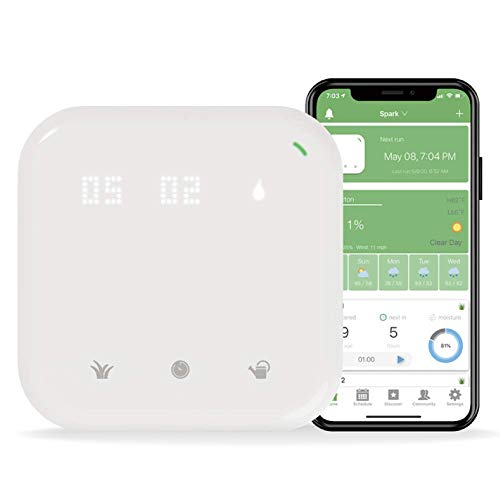
Netro Spark gives an eight-zone system a local touch interface along with app access. The physical controls can select a zone, set a duration, and start a manual run, which gives the owner a way to test or adjust watering without opening a phone. That can be useful during installation, a service call, or a temporary network problem. Eight stations cover a familiar residential mix of lawn, beds, shrubs, vegetables, and drip lines.
The app adds a plant database, location-based weather information, schedule history, and error logs. This design encourages the owner to think about plant needs and recent conditions instead of treating every month as the same calendar. The combination may be appealing for a garden-heavy property where different areas need different runtimes and seasonal attention.
Netro Spark also has a few practical limitations. The product information states that there is no battery backup, so the controller needs steady power. The app service and wireless connection are part of the feature set, and the owner should check the network reach at the mounting point. The system can be a good fit for a careful planner, but it is less compelling for a buyer who wants a simple dial and minimal connected setup.
Pros
- Touch controls let you test a zone while standing beside the valve wiring.
- The plant database gives a mixed garden a more tailored starting point for separate schedules.
- The LED matrix reports watering and network status at the controller, making a quick service check more informative than a basic indicator light.
- Schedule history and error logs give the owner details to review before changing a zone that has behaved unexpectedly.
Cons
- The product information states that steady power is required because there is no battery backup.
- The plant-focused app tools ask for more setup than a simple fixed-calendar controller.
In a mixed garden, Spark’s touch interface and plant-focused app are relevant because different areas may need distinct schedules. A basic lawn routine is a simpler job for a conventional timer.
To buy this product, click here.
7. Orbit B-hyve Smart 6-Zone 57946: Best Compact Connected Controller

Orbit 57946 brings B-hyve app control and weather-aware scheduling to a six-zone system. That smaller station count can be a benefit for a compact property, a townhouse yard, or a replacement project with a settled valve layout. Six independent stations are enough for many lawns, foundation beds, vegetable areas, and small drip circuits, while the indoor or outdoor format gives the installer more freedom around the mounting location.
The app supports custom schedules and remote changes, and weather-based adjustments can help prevent a fixed calendar from running through conditions that call for a pause. A compact controller can also make sense when the wiring area is crowded or when a larger cabinet would add unused capacity without solving another installation need.
The main question is future growth. A property that may add a side yard, pool planting, or another drip section can outgrow six stations sooner than expected. The connected feature set also assumes that the owner is comfortable using the B-hyve service for schedule changes. A local panel or larger controller may be a better long-term fit for a service-heavy property.
Pros
- Six stations keep a settled compact layout straightforward to map and manage.
- Indoor/outdoor placement gives the owner more choice around the existing controller location.
- Weather-based adjustments can ease the routine of updating a compact system when conditions shift during the season.
- App access lets a homeowner revise a run time without walking to the controller mounted near the valve wiring.
Cons
- Six stations leave limited room for a new bed, tree circuit, or other future valve.
- Remote features depend on the B-hyve account and network connection during app-based management.
For a fixed six-valve yard, the 57946 keeps connected scheduling in a compact format. The moment a new drip line or planting bed needs its own valve, its station limit becomes the deciding tradeoff.
To buy this product, click here.
8. Rain Bird ARC6, 6-Zone: Best Smaller Rain Bird Connected Model

Rain Bird ARC6 is suited to a six-station system that needs app access while staying within a compact controller format. The product information describes smart scheduling, mobile control, and local operation, which allows the owner to manage the system away from home while retaining a path for work at the controller. Six stations can cover a modest lawn, planting beds, and a separate drip zone when the valve layout is already settled.
A smaller controller can simplify a replacement because the wire bundle and cabinet remain easy to identify. It also avoids paying for station capacity that the property will not use. The important check is whether the existing system has a pump, master valve, rain sensor, or unusual wiring arrangement that needs a terminal the selected model does not provide.
ARC6 should be viewed as a focused replacement rather than a universal answer for every six-zone property. The app and network features need a stable connection, while the local experience should be understood before installation. If expansion is likely, an eight-zone model can provide useful breathing room for a relatively small increase in cabinet size.
Pros
- A compact six-station design suits an established valve map without a larger cabinet.
- Connected scheduling makes remote edits possible when seasonal needs change.
- Local operation leaves an at-controller path for a short station check when the phone is unavailable.
- Six separate outputs can preserve the existing valve map for a modest yard without stretching a smaller system across shared schedules.
Cons
- Six stations can become restrictive when the landscape is likely to expand.
- The network and sensor details should be checked against the existing installation before replacement.
ARC6 suits an established six-station layout that wants connected scheduling in a compact Rain Bird controller. Verify the exact model’s mounting and wiring requirements first, especially if the timer must stay outdoors.
To buy this product, click here.
9. RAINPOINT Smart 8-Zone Controller: Best Straightforward Wi-Fi Retrofit

RAINPOINT offers an eight-zone controller with 2.4 GHz Wi-Fi, app scheduling, physical buttons, and a standard 24VAC approach. The combination targets a homeowner who wants remote access but still wants to stand at the panel and start a zone, review status, or make a local adjustment. Eight independent stations can separate the common residential mix of turf, beds, trees, and drip areas.
The app provides independent schedules, valve status, upcoming watering information, and history. Weather intelligence can skip watering for rain or freezing conditions, and the system supports a rain sensor. The product information also states that schedules can remain available through power or network interruptions, which is useful for an owner who wants the irrigation routine to continue when a connection is temporarily unavailable.
The controller uses the 2.4 GHz band, so the router settings and signal strength need to be confirmed before installation. Its approach is more self-contained than a platform-heavy smart-home product, which can be an advantage for a basic replacement. Buyers who need Ethernet, deep sensor monitoring, or broad automation support should compare the terminal and software details with a more advanced model.
Pros
- Physical buttons provide a quick local way to start a valve during installation or service.
- Rain-sensor compatibility gives the system an option for a local pause when the required sensor is fitted.
- Independent app schedules let turf, planting beds, and drip follow different watering days rather than one common program.
- Upcoming-run and valve-status details make the next cycle easier to review before it reaches the yard.
Cons
- The controller requires suitable 2.4 GHz coverage at the mounting location.
- Its broader smart-home integration path is more limited than the platform-focused alternatives.
A conventional eight-zone manifold that needs app access and local button tests is where RAINPOINT has a straightforward role. Choose a broader platform if Ethernet, flow monitoring, or significant expansion will be part of the system.
To buy this product, click here.
How to Choose a Smart Sprinkler Controller
Count independent valves before comparing apps
Every valve that needs its own start time or runtime needs its own station. A lawn zone, shrub zone, vegetable bed, drip line, and side-yard section should not be combined simply because they sit near one another. Their sun exposure, soil, plant material, and watering rate may be different. The controller should give each meaningful area an output that can be scheduled separately.
Count the wires at the existing controller and compare that number with the valves in the field. A spare terminal is useful when a property may gain another bed or irrigation circuit. The reserve does not need to be excessive, but choosing a controller with no room for change can turn a small landscape project into another controller replacement.
Decide where the controller will live
Indoor and indoor or outdoor controllers solve different mounting problems. A utility room can protect an indoor model and often gives it a cleaner path to the home router. A garage, shed, or exterior wall may need a weather-resistant case, a protected outlet, and a clear way to route the valve wires without exposing them to water or physical damage.
Measure the wall space and check the power location before ordering. A larger controller may have a deeper cabinet or a different wire-entry position. Network reach also changes from one wall to another. A controller near concrete, metal, or a distant router can need a mesh node or wired connection, so the mounting decision affects the smart feature set.
Choose the balance between app access and local control
App control is useful for a schedule change before a trip, a manual run while watching a newly planted bed, or a quick response to a weather event. Physical buttons, a dial, a screen, or quick-run controls are useful during installation and service. They also help a household member make a local adjustment without learning the whole app.
Think about who will manage the irrigation system. An app-first controller can be a good fit for one owner who handles every schedule. A shared property, rental, or service-maintained landscape may benefit from visible controls. The strongest match usually gives remote access while retaining enough local control for testing and emergency watering.
Review the weather features carefully
Weather-based watering can mean several different things. A controller may skip a scheduled run after rain, adjust runtimes around temperature, use local forecast data, or calculate water need from a larger set of conditions. Those features can reduce waste, but they still rely on correct zone runtimes, plant settings, soil assumptions, and sensor information.
Check how the controller behaves when the network is unavailable. Some systems keep their saved schedule and resume remote features later. Others may need the app for changes while local schedules continue. A smart controller should have a clear failure mode that the homeowner understands before the first season starts.
Match sensors, pumps, and master valves
A rain sensor can stop a run after wet weather. A flow meter can reveal unusual water use or a broken line. A pump or master-valve connection can be required by the irrigation design. These features change the wiring plan, and a controller that mentions compatibility may still require separate equipment.
Photograph the current terminals before removing the old controller. Label the common wire, zone wires, sensor leads, and pump or master-valve wire. Then compare the connection diagram for the new model. Station count alone does not prove that a controller is a safe replacement.
Check the network band and account requirements
Many controllers use the 2.4 GHz band because it travels farther through walls. Some support both 2.4 and 5 GHz. A controller can fail setup when the phone, router, and device are on different network paths or when the signal is weak at the mounting point.
Account setup is another part of the ownership experience. The homeowner should know which app manages the system, how another household member receives access, and what remains available during an outage. A simple written record of the controller login, zone names, and seasonal settings can make service much easier.
Leave time for a complete first-season setup
Smart scheduling does not remove the need for observation. Run every zone after installation and check for missing heads, overspray, leaks, poor coverage, and soil that remains dry. Adjust runtimes after watching the yard through different weather patterns. The first schedule should be treated as a starting point.
Keep the valve map and controller settings together. Note which zone waters which plants, whether the zone uses rotors or drip, and whether a sensor or pump is involved. A clear map helps a future repair and makes the smart features more useful because the controller’s schedule reflects the real irrigation layout.
Frequently Asked Questions
What is the best smart sprinkler controller for most homes?
Rachio 3 is a strong starting point for an eight-zone home that values weather-aware scheduling, app control, and smart-home support. Orbit B-hyve XR is a better match for buyers who need a flexible indoor or outdoor case, while Hunter PRO-HC makes more sense for larger systems with sensors, pumps, or flow monitoring.
How many stations should a smart controller have?
Count the independent valves first, then add room for a likely landscape change. Eight stations cover many residential systems, while twelve or more can be worthwhile when the property has separate beds, drip circuits, distant areas, or planned expansion.
Can a smart sprinkler controller work without Wi-Fi?
Many controllers can keep a saved schedule running during a temporary connection outage, but remote changes, forecast updates, and notifications may stop until the connection returns. Check the individual controller’s offline behavior before treating Wi-Fi as optional.
Should a smart controller be installed indoors or outdoors?
That depends on the enclosure rating and the conditions at the mounting point. A protected garage, utility room, or weather-suitable cabinet can make installation easier, while an exposed location requires a controller and enclosure rated for that environment.
Do smart controllers save water automatically?
They can reduce unnecessary cycles by using forecast data, seasonal adjustments, or sensor inputs. Results still depend on correct zone mapping, functioning valves, suitable runtimes, and a weather service that reflects the property.
Are physical controls useful on a smart controller?
Yes. A start button, dial, or local display makes valve testing and service easier when a phone is unavailable. App-led models can still work well, but they suit buyers who are comfortable doing most programming from a mobile device.
Do I need a rain sensor with weather-based scheduling?
Not always. Forecast-based control may be enough for a connected installation, while a rain sensor adds a local pause based on conditions at the property. It becomes more useful when the yard has shade, runoff, or weather patterns that differ from the forecast.
Final Verdict
Rachio 3 is the best starting point for many eight-zone homes that want weather-aware scheduling, dual-band Wi-Fi, and a clear app. Orbit B-hyve XR makes more sense when indoor or outdoor placement matters, while Rain Bird ARC8 is a balanced choice for a connected Rain Bird installation with local operation.
Hunter PRO-HC is the stronger choice for a larger landscape that needs twelve stations, a touchscreen, sensor connections, or flow monitoring. Yardian Pro is the specialist option for Ethernet and broad smart-home support. Netro Spark, Orbit 57946, ARC6, and RAINPOINT cover more focused needs. Confirm the station count, enclosure, wiring, network path, and local control expectations before making the final selection.

- Ryan
Ryan Mitchell covers sprinkler controllers, smart irrigation, and watering technology at Best Sprinkler Controllers, with a focus on clear comparisons, practical features, and helping homeowners choose the right setup for their yard.
- Best Smart Sprinkler Controllers: 9 Picks in 2026 September 25, 2026