
How Many Sprinkler Zones Do I Need?
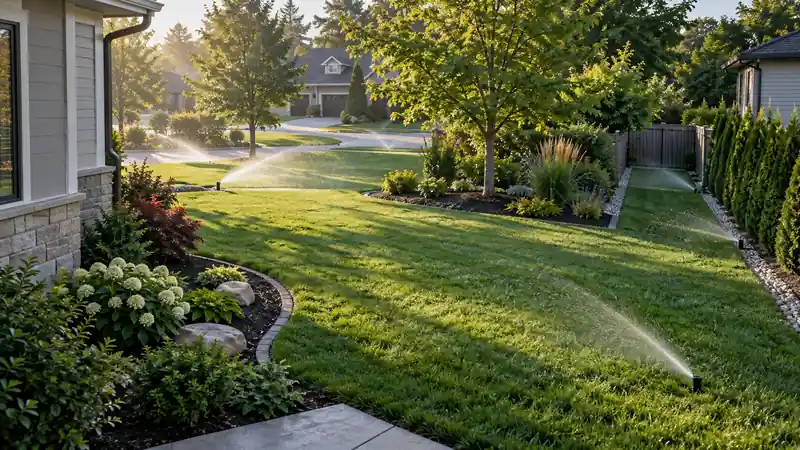
How many sprinkler zones do I need? The answer depends on the valves, watering areas, and equipment in the irrigation system. Yard size can help estimate the project, but it does not determine the answer by itself. A modest property can need several zones when the lawn, planting beds, drip lines, slopes, and shaded areas have different watering requirements. A larger property may need fewer zones than expected when several areas share similar sun, soil, plant material, and sprinkler performance.
The most reliable starting point is the valve count. Each independent valve-controlled area usually needs its own station on the controller. From there, review flow, pressure, run times, wiring, pump or master-valve connections, and the possibility of future expansion. A controller with enough terminals can still be a poor fit if the supply cannot operate several zones as planned.
Once you have mapped the valves, compare the controller size with your plans for the yard. Our guides to the best 6-zone sprinkler controllers and best 8-zone sprinkler controllers cover models for those common capacities, including the installation and accessory checks that matter during replacement.
This guide explains how to count zones, size the controller, identify capacity limits, plan for a replacement, and avoid the common mistake of choosing a controller by station count alone. The goal is a layout that waters each area properly and remains understandable after the first installation.
Use the examples as planning models rather than fixed rules. Valve layouts vary, and local irrigation requirements can change the design. If the system includes a pump, backflow assembly, unusual pressure conditions, or a large landscaped property, a qualified irrigation professional can help confirm the final plan.
Quick Answer
Start with the valves and the watering needs of each area, then use flow, pressure, wiring, and future expansion to confirm the controller size.
- Count independent valves first because each valve that needs its own schedule is usually one zone.
- Check flow and pressure before combining areas that appear to use the same sprinkler type.
- Match controller capacity to the working valve count and leave a sensible reserve for growth.
- Review wiring and support hardware before choosing a replacement controller or adding a new valve.
What a Sprinkler Zone Actually Means
A sprinkler zone is an area controlled by one irrigation valve during a scheduled run. The valve opens, water reaches the heads or emitters connected to that circuit, and the controller closes the valve after the programmed runtime. A station on the controller activates that valve. The terms zone, station, and valve are often used together, but they describe different parts of the same operating path.
The valve is in the field, usually near other valves in a valve box. The station is the controller terminal that sends power to that valve. The zone is the group of sprinklers or emitters that receive water from that valve. One station generally operates one valve, although special systems can use more complex equipment. For a standard residential layout, one independent valve normally means one controller station.
Why one large area may need several zones
A lawn can look like one continuous space and still require several valves. The available water flow may be too low to operate every head together. A long side yard may have a different elevation from the front lawn. A sunny area may dry faster than a shaded area. A drip circuit may require a different runtime from a rotor circuit. Splitting those areas into separate zones lets the system apply water in a controlled way.
Zone separation also makes troubleshooting easier. If one circuit has a clogged nozzle, a broken head, or a leaking valve, the problem can be isolated without changing the schedule for every other area. Clear zone boundaries help the controller’s schedule reflect the actual landscape rather than treating the yard as a single block.
How to Count the Zones You Need
Start with the valve box
Locate every valve box on the property and open it carefully. Count the irrigation valves and record which area each valve serves. Several valves may sit together near the water entry point, while another box may be near a detached garage, side yard, or rear planting bed. Do not assume that one box represents one zone. The box can contain many valves.
Look for wire bundles entering the box and trace the valve outlets toward the heads or drip lines. Label the areas in plain language, such as front lawn, driveway strip, back lawn, foundation beds, side garden, or raised beds. A sketch or phone photograph can preserve the layout before the wiring is disturbed.
Count the controller terminals
Open the existing controller and identify the terminal labels. The common wire is usually separate from the numbered station wires. The numbered wires indicate the controller stations that have been assigned to valves. A system can have unused terminals, so the current controller capacity may be larger than the number of active zones.
Do not count every wire as an active zone without checking its destination. A spare wire may be coiled for future use, and a sensor or pump wire may not operate a station. The valve count, wire labels, and zone test should tell the same story before a new controller is selected.
Run one zone at a time
Use the manual controls on the current controller to activate each station separately. Walk the property and write down what turns on. A station may operate a lawn strip, a group of shrubs, or a drip manifold that is not obvious from the controller cabinet. Listen for valves that click but do not deliver water, and look for heads that are stuck, clogged, or spraying the wrong area.
Run tests at a time when the system can be observed safely. Turn the station off before moving to the next one, then mark any overlap or dry area on the sketch. A zone count that comes from an actual test is more reliable than a count based on the number printed on the controller.
Use Water Flow and Pressure to Refine the Count
Station capacity tells you how many valves the controller can operate. It does not tell you how many heads can run together. The water supply has a flow limit, and the irrigation system needs enough pressure to operate the selected heads correctly. If too many heads run at once, the spray pattern can shrink, rotors can fail to turn, and the far end of the circuit may receive much less water.
Flow is commonly measured in gallons per minute. Each sprinkler head or emitter circuit uses part of the available flow. Add the expected demand for the heads on a circuit, then compare that demand with the supply. A safety margin helps account for pressure changes, dirty filters, seasonal demand, and measurement error. A professional can test static and working pressure when the layout is complicated.
Keep sprinkler types organized
Rotors, spray heads, rotary nozzles, and drip emitters often need different runtimes. A rotor zone may run for a longer period with a slower application rate, while a spray zone may need shorter cycles. Drip irrigation can require a longer, lower-flow schedule. Combining these systems on one valve can create a schedule that is convenient to program but poor for plant health and water use.
Separate circuits can also make seasonal adjustments more accurate. A full-sun lawn may need a different seasonal percentage than a shaded bed. The controller can apply different programs when the hardware makes that separation possible.
Watch elevation and slope
Water moves differently on a slope than on level ground. Lower heads may drain after the valve closes, while upper areas can remain dry. Shorter cycles with soak periods may help the soil absorb water, but the controller needs enough flexibility to create that schedule. A slope may also need pressure-regulated heads or check valves that are part of the irrigation hardware rather than the controller.
Separate zones are useful when elevation changes are large or when one area receives runoff before another area has been watered. The right answer may include hardware changes, not merely another station. Map the slope and observe the system before deciding that a larger controller will solve the issue.
How Many Zones Do Common Properties Need?
| Property pattern | Typical zone range | What changes the answer |
|---|---|---|
| Small townhouse or compact yard | 2 to 4 | Drip beds, front and rear separation, limited flow |
| Typical suburban yard | 4 to 8 | Separate lawns, beds, side strips, and planting zones |
| Large residential property | 8 to 14 or more | Long runs, elevation, several lawns, pump, and expansion |
| Garden-heavy property | 5 to 10 | Drip circuits, greenhouse, beds, and different plant needs |
| Property with a pump or multiple water sources | Varies widely | Pressure, source separation, master valves, and controller wiring |
Example: a compact yard with three zones
A compact property might have a front lawn, a rear lawn, and a small drip bed. The front and rear lawns may need separate schedules because they receive different sun. The drip bed needs a different runtime and may use a filter or pressure regulator. Three valves can provide the separation needed without an oversized controller.
If the property may add a side bed, choose a controller with at least one or two spare stations. The spare capacity costs less than rebuilding the controller later, provided the cabinet, transformer, and wiring plan can support the addition.
Example: a suburban yard with six zones
A six-zone layout might include the front lawn, back lawn, side strip, foundation beds, vegetable garden, and drip containers. The front and back lawns can use different runtimes. The side strip may have narrow spray coverage, while the beds and garden need more careful scheduling. One controller with six active stations can manage that arrangement if the flow and wiring are sound.
Six stations can be enough for a settled landscape, but a new pool area, side planting, or separate tree drip circuit can use the remaining capacity. An eight-zone controller may be a better replacement if the project includes landscaping work in the near future.
Example: a larger property with ten zones
A larger property can divide the front lawn into two circuits, the back lawn into two more, and then use separate valves for side strips, beds, trees, vegetable areas, and drip. Ten zones can also reflect a long distance from the water source, where each circuit needs a limited flow demand to maintain acceptable pressure.
At this scale, the controller should be reviewed alongside the pump, master valve, flow meter, sensor plan, and communication path. A controller with twelve or fourteen stations may provide a better service life than an eight-station model that is full on the day of installation.
Example: a garden with mixed irrigation
A garden may use spray heads for paths, drip lines for raised beds, micro-sprays for shrubs, and a separate circuit for containers. Those systems can have very different runtimes and pressure requirements. The station count may look high for the area, but the separation protects plant health and makes the schedule easier to adjust.
Group zones by similar application rate and plant needs. The controller can then run a sensible schedule for each group, while filters, regulators, and emitters do the hardware work that a controller cannot perform.
Choose Controller Capacity with Room to Grow
Once the active zone count is known, choose a controller with enough usable stations. If the system has six active valves, a six-station controller can work, but it leaves no space for a new bed or a replacement valve that changes the layout. An eight-station controller creates two spare positions. A twelve-station controller may be reasonable for a property that already has a large landscape or a clear expansion plan.
Reserve capacity should be based on the project, not a general desire for the largest number. An oversized controller can make the wiring map harder to read and may require a larger cabinet or transformer. The right reserve is the number of future zones the property can realistically add during the controller’s service life.
Why an exact match can be risky
A controller that is full at installation leaves no easy response to a new garden, a redesigned side yard, or a circuit that must be split after a flow test. The owner may need a second controller or another replacement sooner than expected. A small reserve protects the original investment and keeps the wiring plan simple.
Exact matching can also expose a hidden problem. If every station is assigned and one circuit later proves too large for the available flow, there is no spare station for a split. The water supply and valve box must still support the new circuit, but an available controller terminal makes the correction possible.
When a larger controller is unnecessary
A larger station count is not a substitute for better irrigation design. If a compact yard has three valves and no expansion plan, a fourteen-station controller may add cost and cabinet size without improving coverage. A controller cannot fix poor head spacing, a restricted supply, a leaking valve, or a missing pressure regulator.
Choose additional stations when they solve a known need. The count should support the valves, the water supply, the landscape plan, and the way the system will be maintained.
Do Not Forget the Supporting Hardware
Common wire and station wires
Most residential systems use a common wire shared by the valves and separate station wires that return to the controller. The controller sends power through one station wire and the common connection to open a valve. A damaged common wire can affect several zones at once, while a damaged station wire may affect one zone.
Photograph the existing connections and label every wire before moving them. Color alone is not a safe identification method because installers may use different wire colors or splice sections in the field. A simple label at the controller and another near the valve box can save time later.
Transformer and power
Residential irrigation controllers usually operate the valves through a low-voltage transformer. The voltage, current capacity, plug, and indoor or outdoor location need to match the controller and the valve system. A new controller may include a transformer, require a different connection, or have a power module that changes the installation plan.
Turn off power before handling the controller wiring. If the transformer is hard-wired, the installation may need a qualified electrician. A station count cannot tell you whether the power arrangement is safe or compatible.
Master valve and pump relay
A master valve can close the water supply when no zone is running. A pump relay can start a pump when the controller calls for water. These connections use dedicated terminals on many controllers, and a controller without the required output may not be a direct replacement.
Identify the pump or master-valve wire before choosing a new model. Verify that the controller can provide the required output and that the pump relay matches the system. A wrong connection can damage equipment or leave the system without water.
Rain sensors and flow meters
A rain sensor can pause watering after local rainfall. A flow meter can help identify unusual water use, broken lines, or a valve that remains open. Both features require compatible terminals and hardware. The controller may support the sensor but not include it in the box.
Write down which accessories are already installed and whether they are wired or wireless. An accessory that worked with the old controller may need a different connection or configuration with the new one.
How to Plan a Controller Replacement
Make a zone map
Draw the property, valve boxes, controller location, and the area served by each valve. Mark sprinkler head types, drip lines, slopes, pumps, sensors, and any area that has weak coverage. Give each zone a name that a future homeowner or service person can understand.
Run each zone and compare the actual spray pattern with the map. A zone may have been changed after the original installation, and the controller labels may no longer match the yard. Correct the map before replacing the controller.
Record the current schedule
Write down the start times, programs, runtimes, seasonal adjustments, and rain delays. A new controller may use different terms or have a different programming sequence. Keeping the old settings gives you a starting point while the new controller is tested.
Do not copy a schedule without observing the yard. A previous schedule may have been compensating for a broken head, a seasonal change, or a valve problem. Use the record as a reference, then adjust the new schedule after a complete zone inspection.
Test before closing the cabinet
After the new controller is wired, activate each station manually. Confirm that the named zone turns on, the valve opens fully, and the heads cover the intended area. Look for leaks around the valve box and listen for a pump that starts or stops correctly.
Test the sensor, master valve, or pump connection if the system uses one. Then run a scheduled cycle and confirm that the start times, runtimes, and program assignments behave as expected. A short test can reveal a mislabeled wire before the schedule runs overnight.
Common Sizing Mistakes
Choosing by yard size alone
Acreage is a rough planning clue, not a station count. Two properties of the same size can have different planting layouts, water supplies, slopes, and sprinkler types. Count valves and review the design rather than assuming a fixed number of zones per square foot.
Combining zones because the heads look similar
Heads that look alike can have different nozzles, flow rates, arcs, or elevation. Combining them can reduce pressure and create uneven coverage. Test the circuit and review the nozzle information before merging zones.
Forgetting the drip circuit
Drip lines often need a longer, slower schedule and may require filtration and pressure regulation. They should usually have their own zone or a group of zones with similar equipment. A lawn schedule can be a poor match for a drip bed.
Using every station with no reserve
A full controller leaves no room for expansion or a split caused by a flow problem. A small reserve can protect the system from an avoidable replacement.
Assuming the controller fixes pressure
Changing the controller does not increase the available water supply. Low pressure, restricted pipes, clogged filters, or an undersized pump need a hydraulic solution. A new station may help organize the schedule, but it cannot create flow.
How Scheduling Changes the Zone Count
Separate runtime needs before combining circuits
The number of zones is tied to the schedule you need, to the number of valves alone. Two areas can share a water source and still need separate stations because their application rates are different. A spray zone may put down water quickly, while a rotor zone may need a longer run. A drip zone may need several hours of low-flow operation. If those circuits share a valve, the controller can send one runtime to equipment that needs three different schedules.
Group areas that use similar heads, pressure, and plant material. This makes seasonal changes easier because the same percentage adjustment can apply to a whole group. A lawn area can follow a turf schedule, a foundation bed can follow a planting schedule, and a drip garden can follow a slower cycle. The zone map becomes a schedule map as well as a wiring map.
Use cycle and soak for slopes or heavy soil
Some landscapes cannot absorb all the water in one long run. Heavy soil, compacted ground, and sloped beds may send water toward a drain or low point before the roots receive enough moisture. Cycle-and-soak scheduling divides the total runtime into shorter cycles separated by a pause. The controller needs enough programs or start times to create that pattern.
A separate zone can make cycle-and-soak easier to manage when one section has a steep slope and another section is flat. The controller does not change the soil, but it can give the irrigation design a schedule that respects the way water moves. Observe runoff after the first few cycles and reduce the runtime or increase the pause when water is leaving the planting area.
Separate zones that need different seasonal adjustments
Seasonal adjustment is useful when a controller can increase or reduce a program by a percentage. That setting works best when the zones inside the program have similar water needs. A sunny lawn, a shaded bed, and a drip garden may respond differently to the same change. Separate stations let the owner adjust the areas without disturbing the rest of the property.
Keep the schedule names specific. Names such as back lawn rotors, north bed drip, and driveway spray make it easier to understand why a runtime changed. Generic names such as zone one and zone two save time on the first setup but create confusion during a repair or seasonal review.
When One Controller Is Not Enough
Large properties and distant valve boxes
A property can outgrow one controller because of distance as well as station count. A rear field, detached garage, or separate garden may have valve boxes that are difficult to reach with a single wire bundle. A second controller can shorten the wire path, but it creates another schedule, power source, and maintenance point.
Before adding another controller, review the water source and the operating sequence. Two controllers that call for water at the same time can exceed the available flow or start a pump in an unintended way. A shared master valve, a scheduling rule, or a professional control system may be needed to coordinate the equipment.
Separate water sources
Some properties use municipal water for one area and a well or rainwater system for another. Separate sources can have different pressure, filtration, and operating limits. The controller arrangement should reflect those differences, and the valves or pumps should prevent one source from being opened by the wrong schedule.
A station count does not describe a multi-source system by itself. Write down which valves belong to each source and identify any pump relay or pressure device. The final design should make it clear which controller, valve, and water source work together.
When a second controller creates more problems
Two controllers can add confusion if zone names, schedules, and service records are not kept together. A future homeowner may not know which controller operates which part of the yard. The second cabinet also adds another transformer, network connection, and battery or clock setting to maintain.
Use one larger controller when it can reach the valves safely and still fits the power and enclosure plan. Use two controllers when the property layout, water sources, wire distance, or operating requirements make one cabinet impractical. The decision should come from the system design rather than from station count alone.
A Practical Zone-Planning Checklist
- Locate every valve box and photograph the valve layout.
- Open the current controller and separate station wires from common, sensor, pump, and master-valve wires.
- Run each station manually and write down the areas that turn on.
- Mark sprinkler type, nozzle pattern, drip equipment, slopes, and areas with weak coverage.
- Measure or estimate flow and working pressure when several heads operate together.
- Separate circuits that need different runtimes, pressure, application rates, or seasonal adjustments.
- Choose a controller with enough active stations and a realistic reserve.
- Confirm the transformer, enclosure, power, sensor, pump, and network requirements.
- Label the new controller and create a zone map before leaving the installation.
- Run a full test cycle and correct wiring or coverage problems before setting a long-term schedule.
This checklist turns a vague question into a series of observable decisions. It also creates a record that can be used during winterization, spring startup, valve repair, or a future controller replacement. A clear map can be more valuable than a controller with a long feature list because it explains how the irrigation system actually works.
Frequently Asked Questions
How many sprinkler zones does a typical residential yard need?
There is no reliable zone count based on acreage alone. Many homes use four to eight zones, but the correct number follows the independent valves, sprinkler types, flow limits, slope, sun exposure, and planting needs.
Does each sprinkler head need its own zone?
No. Several heads can share a zone when they use compatible precipitation rates and can run within the available flow and pressure. Heads with different water patterns or very different runtimes often belong on separate circuits.
Should drip irrigation have its own zone?
Usually, yes. Drip lines often need lower flow, longer runtimes, and different seasonal adjustments than spray or rotor heads. A dedicated valve also makes it easier to inspect leaks and fine-tune the garden schedule.
How many spare stations should I leave on a controller?
One spare station is a useful minimum for a settled landscape, while two can be more practical when planting beds or drip areas may be added. The right reserve depends on the cost of replacement and how likely the property is to change.
Can I add another valve to an existing controller?
Only when the controller has an unused station and the transformer, common wire, and valve wiring can support the addition. A spare terminal alone does not solve a flow, power, or wire-capacity problem.
Can a larger controller improve water pressure?
No. Station capacity determines how many valves can be controlled, not how much pressure reaches the heads. Pressure problems usually require checking the supply, pipe sizing, valves, filters, elevation, and zone design.
Final Answer
Most residential systems need four to eight sprinkler zones, but the correct number comes from the independent valves and the way water must be applied across the property. Count the valves, test every station, review the flow and pressure, and separate areas that have different sprinkler types, elevations, or plant needs.
Choose a controller with enough active stations and a realistic reserve. Then confirm the common wire, transformer, pump or master valve, sensors, flow meter, enclosure, and network requirements. A well-sized controller is easier to program, easier to service, and more likely to keep the landscape healthy through changing seasons.

- Ryan
Ryan Mitchell covers sprinkler controllers, smart irrigation, and watering technology at Best Sprinkler Controllers, with a focus on clear comparisons, practical features, and helping homeowners choose the right setup for their yard.
- Best Irrigation Controllers With Rain Sensor Support November 4, 2026
- Best Sprinkler Controllers for Large Yards: 9 High-Capacity Picks November 2, 2026
- Best WaterSense Irrigation Controllers: 7 Certified Picks October 29, 2026
- Can I Replace an Old Sprinkler Controller With a Smart Controller? October 27, 2026
- Best Weather-Based Irrigation Controllers: 9 Smart Picks October 25, 2026